
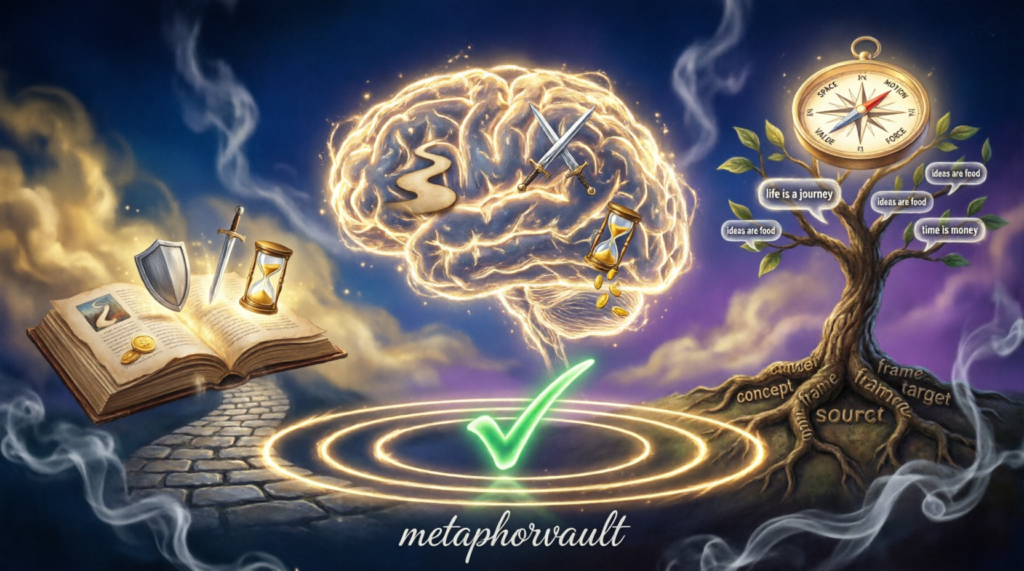
If you’re searching for a Metaphors We Live By summary, you probably want a clear explanation without reading a dense academic book. Maybe you’re a student preparing for class, a writer exploring language, or simply curious about why people say things like “time is money” or “I won the argument.”
Metaphors We Live By explains that metaphors are much more than figures of speech. They shape the way we think, speak, and understand the world every day. Many readers find the book fascinating but also difficult because it introduces ideas from language, philosophy, and psychology.
This guide breaks everything into simple English. You’ll learn the book’s main ideas, understand its key concepts, and see why it remains one of the most influential books about language. Every section has been for 2026 and written for everyday readers.
What Is Metaphors We Live By About?
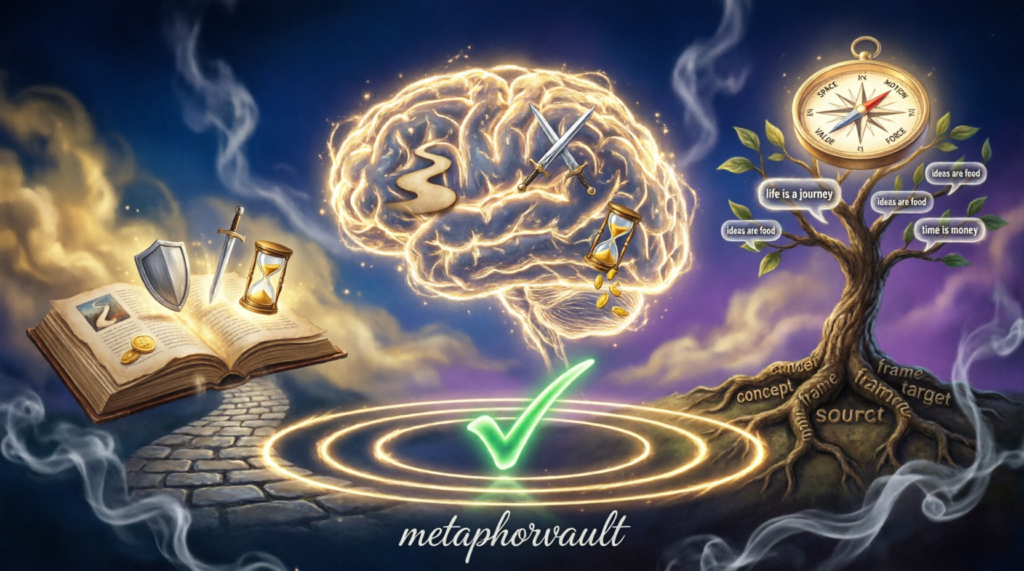
Metaphors We Live By argues that metaphors are not just decorative language. They are mental patterns that influence how people think, make decisions, solve problems, and communicate.
Authors George Lakoff and Mark Johnson explain that everyday expressions reveal hidden ways of thinking. When we describe an argument as something we “win” or “lose,” we are treating discussion like a battle. These patterns become so common that we often stop noticing them.
Instead of asking, “What does this metaphor mean?” the book asks a deeper question:
How do metaphors shape the way we experience life?
That simple idea changed modern studies of language and continues to influence education, psychology, communication, artificial intelligence, and cognitive science.
Definition and Meaning
Simple Definition
Metaphors We Live By is a nonfiction book that explains how metaphors shape human thought, not just language. It shows that people naturally understand many ideas by comparing them with familiar experiences.
Quick Explanation
The book says that people rarely think in completely literal ways. Instead, the brain constantly connects one idea to another.
For example:
- Time is money
- Life is a journey
- Love is a journey
- Ideas are food
These are not random expressions. They reflect deeper ways of thinking that guide everyday choices.
Summary Table
| Topic | Simple Meaning |
|---|---|
| Book | Explains how metaphors shape thought |
| Authors | George Lakoff and Mark Johnson |
| Main idea | Metaphors influence thinking before they influence speaking |
| Focus | Everyday language and human understanding |
| First published | 1980 |
| Why it matters | Shows that language reflects how people think |
Why We Use This Book Summary
Many people search for a summary because the original book can feel challenging. It introduces new ideas and uses examples from philosophy, linguistics, and daily conversation.
A simple summary helps readers:
- Understand the central message quickly.
- Prepare for school or college discussions.
- Review important ideas before exams.
- Refresh their memory after reading the book.
- See how the concepts apply to everyday conversations.
- Understand why common expressions reveal hidden thought patterns.
The book also helps writers, teachers, speakers, marketers, and anyone interested in communication notice how language quietly shapes opinions and behavior.
Main Ideas Explained
1. Metaphors Shape Thought
The book’s biggest idea is that metaphors exist in the mind before they appear in speech.
People do not simply use metaphorical words. They organize many experiences through metaphorical thinking.
For example, if someone believes time is money, they naturally say:
- I spent two hours on that project.
- You’re wasting my time.
- That meeting cost me an afternoon.
These expressions feel normal because the underlying metaphor shapes everyday thinking.
2. Everyday Language Is Full of Metaphors
Many people think metaphors belong only in poems or novels.
The authors disagree.
Ordinary conversations contain metaphor after metaphor, even when speakers never notice them.
Examples include:
- She climbed the corporate ladder.
- He fell into depression.
- We’re moving forward.
- That idea went over my head.
These expressions have become part of daily English.
3. Conceptual Metaphors Matter Most
The book introduces the idea of conceptual metaphors.
A conceptual metaphor connects one broad idea with another.
For example:
- Life is a journey
- Knowledge is light
- Love is a journey
- Ideas are food
Individual phrases come from these larger mental patterns.
4. Physical Experience Shapes Abstract Thinking
People understand difficult ideas by connecting them to physical experiences.
Children learn about moving forward before they understand progress.
Because of this, people often describe improvement as moving ahead and failure as falling behind.
The body influences language more than many people realize.
5. Arguments Are Often Understood as War
One of the book’s most famous examples is:
Argument is war.
People commonly say:
- She defended her position.
- I attacked his point.
- He shot down my idea.
- She won the debate.
Most conversations are not battles, yet people describe them that way because of this hidden metaphor.
6. Metaphors Highlight Some Ideas and Hide Others
Every metaphor helps people notice certain features while ignoring others.
If work is described as a race, speed becomes important.
If work is described as teamwork, cooperation becomes more important.
Changing the metaphor changes the perspective.
7. Culture Influences Metaphors
Some metaphors appear across many cultures, while others reflect local traditions and values.
The authors explain that metaphorical thinking is shaped by shared experiences, history, and social practices.
That is why languages often express similar ideas in different ways.
8. Language Reflects Human Experience
People often believe language is separate from experience.
The book argues the opposite.
Everyday speech grows out of how people move, interact, learn, and solve problems in the real world.
9. There Is No Completely Literal Way of Thinking
The authors suggest that even logical thinking depends on metaphorical structures.
This does not mean facts disappear.
Instead, abstract ideas become easier to understand through familiar experiences.
10. Metaphors Affect Decisions
The way a problem is described influences how people respond.
If crime is described as a disease, people may focus on treatment and prevention.
If crime is described as a war, they may prefer stronger enforcement.
The metaphor changes the way people think about solutions.
11. Metaphors Help Explain Complex Ideas
Teachers, scientists, and business leaders often rely on metaphors to explain difficult topics.
Comparing unfamiliar ideas with familiar experiences makes learning faster and easier.
Without these comparisons, many abstract concepts would feel much harder to understand.
12. Different Metaphors Create Different Perspectives
A single topic can be viewed through more than one metaphor.
For example, education can be described as:
- Building a foundation
- Opening doors
- Climbing a ladder
- Growing a garden
Each comparison encourages people to focus on different aspects of learning.
13. Creativity Builds on Existing Metaphors
Creative writers do not invent every metaphor from nothing.
Many memorable expressions grow from common conceptual metaphors and give them a fresh twist.
This is one reason poetry and storytelling often feel both familiar and surprising.
14. The Book Changed Language Studies
When it was first published, the book challenged the traditional belief that metaphors were mainly literary devices.
Its ideas influenced research in linguistics, education, psychology, philosophy, communication, and cognitive science, making it one of the most widely discussed books on metaphor.
15. The Main Lesson
The central message is simple:
People do not just speak with metaphors.
They think, learn, reason, and understand life through metaphors.
Once you notice these hidden patterns, everyday conversations begin to reveal much more about how people see the world.
Quick Reference Table
The table below brings together the book’s main ideas in a simple, easy-to-scan format.
| Main Idea | What It Means | Why It Matters |
|---|---|---|
| Metaphors shape thought | We think through comparisons, not just words. | Explains how people understand complex ideas. |
| Everyday language is metaphorical | Common expressions reflect deeper thinking. | Shows metaphors are part of daily life. |
| Conceptual metaphors | One idea is understood through another. | Helps explain patterns behind many phrases. |
| Experience influences thinking | Physical experiences shape abstract ideas. | Connects language with real life. |
| Argument is war | Discussions are often described like battles. | Reveals hidden assumptions in communication. |
| Metaphors highlight and hide | Every comparison emphasizes some ideas and ignores others. | Different metaphors change perspective. |
| Culture affects metaphors | Society influences how people describe the world. | Explains why expressions vary across cultures. |
| Language reflects experience | Daily speech grows from everyday life. | Makes language easier to understand. |
| Literal thinking is limited | Abstract ideas often depend on metaphor. | Challenges traditional views of language. |
| Metaphors affect decisions | The words used influence opinions and choices. | Shows the power of framing. |
| Metaphors explain complexity | Comparisons simplify difficult subjects. | Useful in education and communication. |
| Different metaphors, different views | One topic can be described in many ways. | Encourages flexible thinking. |
| Creativity builds on metaphor | Writers reshape familiar comparisons. | Makes language memorable. |
| Lasting influence | The book changed language research. | Its ideas remain widely studied. |
| Core message | People live through metaphors every day. | Helps readers notice hidden patterns. |
Real-Life Conversations
Conversation 1: Friends Talking
Emma: I’m reading Metaphors We Live By for class, but it’s harder than I expected.
Jake: I felt the same way. The summary helped me understand the main idea first.
Emma: So the book isn’t just about fancy language?
Jake: Exactly. It explains that metaphors shape how we think every day.
Emma: Like saying “I’m running out of time”?
Jake: Right. We treat time like something we can spend or lose.
Conversation 2: At Work
Manager: We need a better way to explain this project to new employees.
Team Member: Maybe we should compare it to building a house.
Manager: That’s a good idea.
Team Member: That’s actually one of the lessons from Metaphors We Live By. People understand new ideas faster when they connect them to familiar experiences.
Manager: That approach should make our training much clearer.
Everyday Usage
Even if someone has never heard of Metaphors We Live By, they probably use its ideas every day.
In Conversations
People naturally say things like:
- “I’m at a crossroads.”
- “We’re moving in the right direction.”
- “That idea didn’t click.”
- “She climbed to the top.”
These expressions feel normal because metaphorical thinking is part of everyday English.
In Writing
Authors, journalists, teachers, and speakers often use familiar comparisons to make difficult ideas easier to understand.
A simple metaphor can explain more than a long technical description.
On Social Media
Short posts often depend on metaphor because they communicate emotion quickly.
Examples include:
- “Today was a roller coaster.”
- “I’m finally seeing the light.”
- “My motivation hit a wall.”
- “This project is taking off.”
These expressions make posts feel more vivid without needing long explanations.
Common Mistakes
| Mistake | Reason | Correct Version |
|---|---|---|
| Thinking the book only studies poetry | The book focuses on everyday language. | Remember it explains ordinary conversations too. |
| Believing metaphors are just figures of speech | The authors argue they shape thought itself. | View metaphors as mental patterns, not just words. |
| Reading examples too literally | Many examples represent deeper concepts. | Look for the underlying idea behind each expression. |
| Assuming every culture uses identical metaphors | Cultures often develop different comparisons. | Expect similarities as well as differences. |
| Memorizing phrases without understanding concepts | Individual examples come from broader metaphor systems. | Learn the main conceptual metaphor first. |
| Confusing metaphor with simile | A metaphor directly connects ideas, while a simile uses words like “like” or “as.” | Understand the difference before analyzing examples. |
Related Terms
Although these ideas are connected, they are not exactly the same.
| Term | How It Differs from Metaphors We Live By |
|---|---|
| Metaphor | A single comparison between two ideas. The book explains the larger thinking behind many metaphors. |
| Conceptual Metaphor | A mental pattern that creates many everyday expressions, such as “Time is Money.” |
| Simile | Compares two things using “like” or “as,” while metaphors make a direct connection. |
| Idiom | A fixed expression whose meaning is understood by usage. Some idioms come from conceptual metaphors, but not all do. |
Frequently Asked Questions
Is Metaphors We Live By difficult to read?
Many readers find the original book challenging because it discusses philosophy, linguistics, and cognitive science. A simple summary makes the central ideas much easier to understand before reading the complete book.
Who wrote Metaphors We Live By?
The book was written by George Lakoff and Mark Johnson. Their work changed how many researchers think about language, communication, and human understanding.
What is the main message of the book?
The authors argue that metaphors do more than decorate language. They shape how people think, solve problems, communicate, and understand abstract ideas in everyday life.
Why is “Argument Is War” so famous?
It clearly shows how people describe disagreements using the language of conflict. Expressions such as “defend your position” or “attack an idea” reveal a deeper way of thinking about arguments.
Is this book useful outside of school?
Yes. Writers, teachers, business professionals, public speakers, marketers, and anyone interested in communication can benefit from understanding how metaphors influence everyday thinking.
Why do people search for a summary?
Many readers want a faster way to understand the book’s key ideas before reading it, preparing for exams, joining discussions, or reviewing important concepts.
Does the book still matter today?
Yes. Although it was first published in 1980, its ideas continue to influence research in language, education, psychology, communication, and artificial intelligence. The book remains widely recommended because its central message is still relevant.
What should I remember after reading this summary?
The biggest lesson is that metaphors are not simply expressions people use. They are mental tools that help people understand the world, make decisions, and communicate ideas every day.
Final Thoughts
Metaphors We Live By is much more than a book about language. It shows that the words people choose often reflect how they understand the world. From everyday conversations to classrooms and workplaces, metaphors quietly shape thinking, learning, and decision-making.
If you remember one idea from this summary, let it be this: people don’t just use metaphors—they think through them. Once you start noticing these patterns, common expressions take on new meaning, and you’ll better understand how language influences everyday life.
descover more post
29+ River Metaphors and What They Really Mean 2026
26+ Creative Metaphors for Wind With Meanings & …
28+Metaphors for Cold That Make Your Writing Stronger …

Kovien is an experienced English language researcher, editor, and digital content strategist at MetaphorVault.com. He earned a Bachelor’s degree in English Language and Literature and has spent more than 5 years creating educational resources that simplify figurative language, metaphors, idioms, and modern English usage. His expertise combines linguistic knowledge with practical SEO writing, allowing him to produce content that is both informative and engaging. Kovien enjoys transforming complex language concepts into clear, relatable explanations supported by real-world examples. His work is driven by a commitment to accuracy, originality, and continuous learning. Through MetaphorVault.com, he aims to help readers build stronger communication skills and gain greater confidence in understanding and using the English language.