You know that moment when saying something is “cold” just doesn’t feel strong enough? Maybe you’re describing a freezing winter morning, a distant relationship, or a look that says more than words ever could. That’s where metaphors can make all the difference.
Cold isn’t only about temperature—it can also express emotions, silence, fear, loneliness, or tension. In this guide, you’ll find 30 creative metaphors for cold, along with their meanings, examples, and simple explanations so you can use them naturally in writing, conversations, school assignments, or creative projects.
What Are Metaphors for Cold?
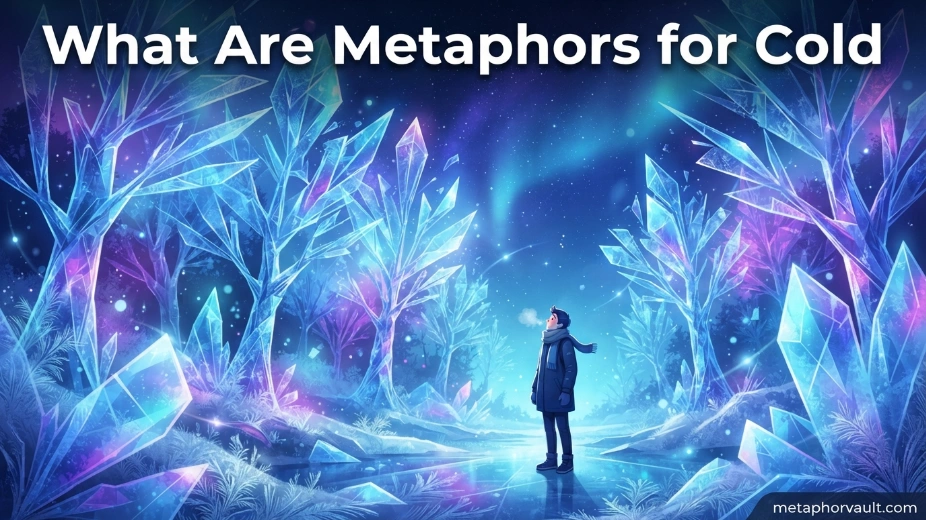
Metaphors for cold are figurative expressions that compare cold to another object, feeling, or experience without using words like “as” or “like.” They help describe temperature, emotions, relationships, or situations in a more colorful and memorable way. Instead of simply saying something is cold, a metaphor paints a stronger picture in the reader’s mind.
A good metaphor does more than describe the weather. It can suggest loneliness, fear, distance, calmness, or even beauty, depending on the context.
For example:
- His heart was ice. → He showed no kindness or emotion.
- The room became a freezer. → The atmosphere suddenly felt tense or unfriendly.
- Winter wrapped the town in a frozen blanket. → Everything became quiet and covered in snow.
Because these expressions create strong mental images, they are common in stories, poems, speeches, songs, and everyday conversations.
Definition and Meaning
A metaphor for cold is a figure of speech that describes cold by saying something is another object or condition instead of stating it directly.
Unlike a simile, a metaphor does not use like or as.
Simple Definition
A metaphor for cold compares cold to something else to create a stronger image or feeling.
Quick Explanation
People use cold metaphors to describe:
- Weather
- People’s emotions
- Relationships
- Silence
- Fear
- Loneliness
- Difficult situations
Some metaphors focus on physical cold, while others describe emotional distance or uncomfortable moments.
Summary Table
| Term | Meaning |
|---|---|
| Metaphor for cold | A direct comparison that represents cold using another image or object |
| Literal cold | Actual low temperature |
| Figurative cold | Emotional distance, silence, fear, or lack of warmth |
| Common use | Writing, literature, speeches, conversations, social media |
Why We Use Metaphors for Cold
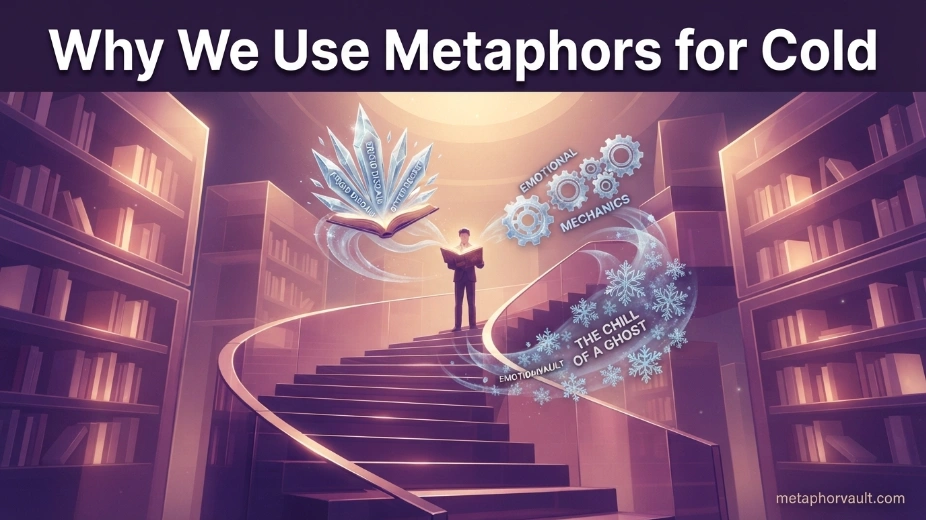
Cold often represents much more than temperature. A carefully chosen metaphor helps express feelings that plain words cannot fully capture.
People commonly use cold metaphors to:
- Make stories more vivid
- Describe emotions without explaining them directly
- Show tension between people
- Create dramatic scenes
- Add depth to poems
- Improve speeches and presentations
- Write engaging captions on social media
- Make conversations more expressive
For example, saying “Her words were ice” instantly suggests emotional pain without describing every detail.
Likewise, “The meeting turned into a freezer” quickly tells readers that everyone became uncomfortable or silent.
1. Ice in the Veins
Meaning: Calm, fearless, or emotionally detached.
Example Sentence: Even during the emergency, she seemed to have ice in her veins.
Tone: Neutral
2. A Frozen Heart
Meaning: Someone who lacks kindness or compassion.
Example Sentence: After years of disappointment, he felt his heart had become frozen.
Tone: Neutral
3. A Human Iceberg
Meaning: Someone who appears distant or difficult to approach.
Example Sentence: My new manager looked like a human iceberg, but he was actually friendly.
Tone: Informal
4. A Walking Freezer
Meaning: Someone who always feels cold or creates an uncomfortable mood.
Example Sentence: Sarah is a walking freezer during winter.
Tone: Informal
5. Winter’s Grip
Meaning: Powerful cold weather covering an area.
Example Sentence: Winter’s grip held the mountains for months.
Tone: Neutral
6. A Frozen Blanket
Meaning: Snow or frost covering everything.
Example Sentence: Morning revealed a frozen blanket across the fields.
Tone: Neutral
7. Crystal Air
Meaning: Extremely cold but clean and fresh air.
Example Sentence: We breathed the crystal air during our hike.
Tone: Neutral
8. The World Turned to Glass
Meaning: Everything became icy and still.
Example Sentence: Overnight, the world turned to glass.
Tone: Literary
9. Frost’s Fingers
Meaning: Cold spreading gently over surfaces.
Example Sentence: Frost’s fingers reached every window overnight.
Tone: Literary
10. An Ice Palace
Meaning: A place that feels extremely cold.
Example Sentence: Their office felt like an ice palace.
Tone: Informal
11. The Air Had Teeth
Meaning: Cold that feels painful.
Example Sentence: We stayed inside because the air had teeth.
Tone: Literary
12. A Glacier Between Them
Meaning: Emotional distance between people.
Example Sentence: After the argument, a glacier stood between them.
Tone: Neutral
13. Snow Wrapped the Earth
Meaning: Snow covered everything peacefully.
Example Sentence: By dawn, snow wrapped the earth in silence.
Tone: Literary
14. Frozen Silence
Meaning: Deep, uncomfortable quiet.
Example Sentence: The room fell into frozen silence.
Tone: Neutral
15. Cold Steel
Meaning: Harsh, emotionless determination.
Example Sentence: His voice carried cold steel.
Tone: Formal
16. An Arctic Smile
Meaning: An unfriendly or fake smile.
Example Sentence: She greeted us with an Arctic smile.
Tone: Neutral
17. The Sun Forgot Us
Meaning: A period of long, bitter cold.
Example Sentence: It felt as though the sun forgot us.
Tone: Literary
18. A Snow Prison
Meaning: Being trapped by snow.
Example Sentence: The storm turned the cabin into a snow prison.
Tone: Neutral
19. Ice Wrapped Around Him
Meaning: Fear or shock made someone feel cold.
Example Sentence: Hearing the news, ice wrapped around him.
Tone: Neutral
20. Frozen Time
Meaning: A moment that seems completely still.
Example Sentence: During the snowfall, it felt like time had frozen.
Tone: Literary
21. The Wind Was a Knife
Meaning: Very sharp, painful cold.
Example Sentence: The wind was a knife against our faces.
Tone: Neutral
22. A Polar Wall
Meaning: Strong emotional distance or rejection.
Example Sentence: She built a polar wall after being betrayed.
Tone: Neutral
23. An Ice Cage
Meaning: Feeling emotionally trapped.
Example Sentence: Depression became an ice cage around him.
Tone: Literary
24. Frozen Shadows
Meaning: A cold, dark, lifeless setting.
Example Sentence: Frozen shadows covered the empty street.
Tone: Literary
25. Winter Was King
Meaning: Winter completely dominated the season.
Example Sentence: For weeks, winter was king.
Tone: Literary
26. An Ocean of Ice
Meaning: Endless freezing conditions.
Example Sentence: The valley looked like an ocean of ice.
Tone: Neutral
27. A Heart Locked in Ice
Meaning: Someone refuses to show emotion.
Example Sentence: His heart stayed locked in ice.
Tone: Neutral
28. Cold Fire
Meaning: Quiet but powerful emotion.
Example Sentence: Her eyes burned with cold fire.
Tone: Literary
29. The Sky Was Frozen
Meaning: The atmosphere looked still and icy.
Example Sentence: At sunrise, the sky was frozen above the lake.
Tone: Literary
30. Winter’s Breath
Meaning: A blast of icy air.
Example Sentence: Winter’s breath swept through the open door.
Tone: Neutral
Quick Reference Table
| Expression | Meaning | Tone |
|---|---|---|
| Ice in the veins | Calm or fearless | Neutral |
| Frozen heart | Emotionless person | Neutral |
| Human iceberg | Distant personality | Informal |
| Walking freezer | Always cold | Informal |
| Winter’s grip | Strong winter weather | Neutral |
| Frozen blanket | Snow covering land | Neutral |
| Crystal air | Fresh freezing air | Neutral |
| World turned to glass | Everything icy | Literary |
| Frost’s fingers | Frost spreading | Literary |
| Ice palace | Very cold place | Informal |
| Air had teeth | Painfully cold | Literary |
| Glacier between them | Emotional distance | Neutral |
| Snow wrapped the earth | Peaceful snowfall | Literary |
| Frozen silence | Awkward quiet | Neutral |
| Cold steel | Harsh determination | Formal |
| Arctic smile | Cold greeting | Neutral |
| Sun forgot us | Long cold period | Literary |
| Snow prison | Trapped by snow | Neutral |
| Ice wrapped around him | Sudden fear | Neutral |
| Frozen time | Still moment | Literary |
| Wind was a knife | Sharp cold wind | Neutral |
| Polar wall | Emotional barrier | Neutral |
| Ice cage | Emotional trap | Literary |
| Frozen shadows | Cold, lifeless scene | Literary |
| Winter was king | Winter dominated | Literary |
| Ocean of ice | Endless cold | Neutral |
| Heart locked in ice | Hidden emotions | Neutral |
| Cold fire | Quiet intensity | Literary |
| Sky was frozen | Still winter sky | Literary |
| Winter’s breath | Icy gust of air | Neutral |
Real-Life Conversations
Conversation 1: Friends Talking About Winter
Emma: Did you walk to school this morning?
Jake: I did, and the wind was a knife. My face was freezing after five minutes.
Emma: Same here. It felt like winter’s grip wasn’t going to let go.
Jake: I can’t wait for spring. This weather is getting old.
Emma: At least the snow looked pretty. It was like a frozen blanket over the whole neighborhood.
Conversation 2: Office Meeting
Manager: Did anyone notice how quiet the meeting became after the announcement?
David: Yes. There was a glacier between them after they disagreed.
Manager: I felt it too. The room fell into frozen silence for a few minutes.
David: Hopefully tomorrow’s discussion will be more relaxed.
Everyday Usage
Metaphors for cold appear in many parts of daily life. They help people describe feelings, weather, and situations in a more interesting way.
In Everyday Conversation
People often use cold metaphors to talk about emotions or relationships.
Examples:
- “She gave me an Arctic smile.”
- “There’s a glacier between us right now.”
These expressions say much more than simply calling someone “cold.”
In Creative Writing
Authors use cold metaphors to build atmosphere and emotion.
Example:
Winter’s breath drifted through the empty streets, leaving silence behind.
This creates a stronger picture than saying the weather was cold.
On Social Media
Cold metaphors also work well in captions and short posts.
Examples:
- “Today’s weather has teeth.”
- “Winter wrapped the city in white.”
- “Coffee is winning against winter’s grip.”
- “The world turned to glass this morning.”
These phrases are short, visual, and memorable.
Common Mistakes
| Mistake | Reason | Correct Version |
|---|---|---|
| Saying “cold like ice” is a metaphor | It is a simile because it uses like. | “His heart was ice.” |
| Using too many metaphors together | It can confuse readers. | Pick one strong image. |
| Mixing warm and cold images | Mixed imagery weakens the sentence. | Stay with one theme. |
| Choosing a metaphor that doesn’t fit | Some expressions describe emotions, not weather. | Match the metaphor to the situation. |
| Repeating the same metaphor often | It becomes less effective. | Use different expressions naturally. |
Related Terms
Although these terms are similar, they are not the same.
| Term | Meaning | Difference |
|---|---|---|
| Metaphor | Direct comparison | Says one thing is another. |
| Simile | Comparison using like or as | Example: “Cold as ice.” |
| Personification | Gives human traits to non-human things | Example: “Winter knocked on the door.” |
| Idiom | Fixed expression with a figurative meaning | Example: “Left out in the cold.” |
Frequently Asked Questions
What is a metaphor for cold?
A metaphor for cold describes cold by saying something is something else instead of comparing it with “like” or “as.” For example, saying “The room was a freezer” paints a much stronger picture than simply saying it was cold.
What is the difference between a metaphor and a simile for cold?
A metaphor makes a direct comparison, like “His heart was ice.” A simile uses words such as “like” or “as,” as in “Her hands were as cold as ice.”
Can metaphors for cold describe emotions?
Yes, and they often do. They can show emotional distance, sadness, fear, or someone who seems unkind or detached in a way that feels more vivid than a literal description.
Are cold metaphors common in literature?
They are. Authors use them to create atmosphere, reveal emotions, build tension, and make scenes or characters more memorable.
Can I use cold metaphors in everyday conversation?
Definitely. Phrases like “the room went cold” or “she gave me an icy stare” are common and help make everyday conversations more expressive.
Which metaphor works best for freezing weather?
It depends on the image you want to create. Expressions like winter’s grip, the wind was a knife, the air had teeth, and winter’s breath all work well for describing bitter cold.
Are metaphors for cold suitable for students?
Yes. They’re great for essays, stories, speeches, and creative writing because they make descriptions more engaging and easier for readers to picture.
How can I create my own metaphor for cold?
Start by thinking about what cold reminds you of or how it feels. Then describe it as if it actually is that thing, making sure the image fits naturally with what you’re writing.
If you’d like, I can also rewrite the rest of the article so it has the same natural, human-written style throughout.
Final Thoughts
Metaphors for cold do much more than describe low temperatures. They help express emotions, create atmosphere, and make everyday language more vivid.
Whether you’re writing a story, improving a school assignment, crafting a poem, or simply looking for a better way to describe a chilly day, these expressions can bring your words to life.
Practice using different metaphors in the right context, and you’ll soon find that your writing and conversations feel more natural, engaging, and memorable.

Anderson is the founder and lead content writer at MetaphorVault.com, where he specializes in creating engaging, easy-to-understand content about metaphors, idioms, figurative language, and modern English expressions. With over 8 years of experience in content writing and language education, he is passionate about making complex language concepts simple and practical for readers of all levels. His work focuses on delivering accurate, well-researched, and reader-friendly articles that help students, writers, educators, and English learners improve their communication skills. Through MetaphorVault.com, Anderson is committed to publishing high-quality, informative content that is both engaging and trustworthy.