
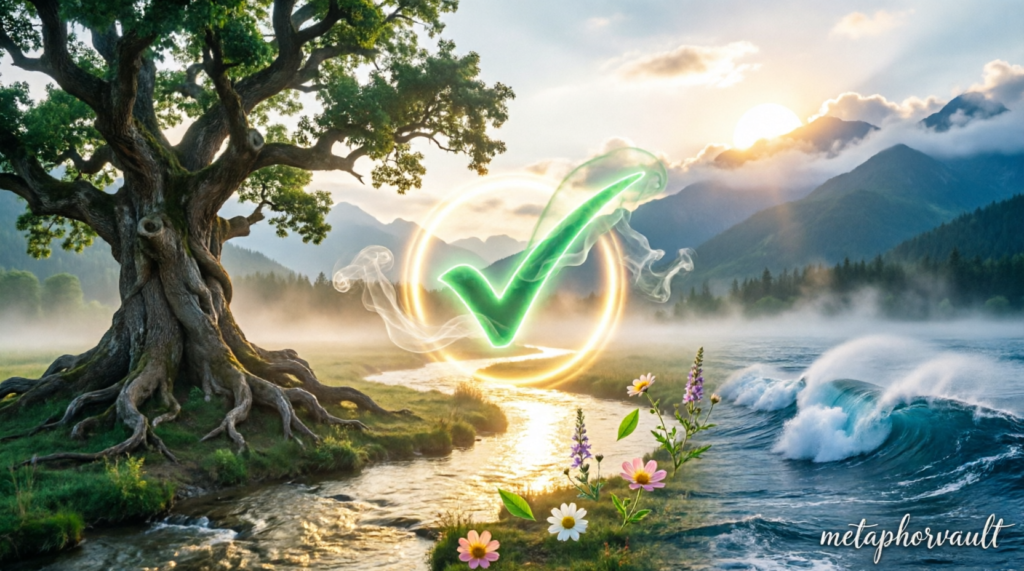
Nature has always helped people explain thoughts, feelings, and life experiences. A single image of a river, mountain, tree, or storm can express an idea more clearly than a long explanation. That’s why metaphors in nature appear in books, poems, speeches, conversations, songs, and even social media every day.
Many people search for metaphors in nature because they want better writing, stronger communication, or a simple way to understand figurative language. They often wonder which expressions are true metaphors, what they mean, and how to use them naturally.
This 2026 guide answers those questions with simple explanations, practical examples, and everyday usage that anyone can understand.
What Are Metaphors in Nature?
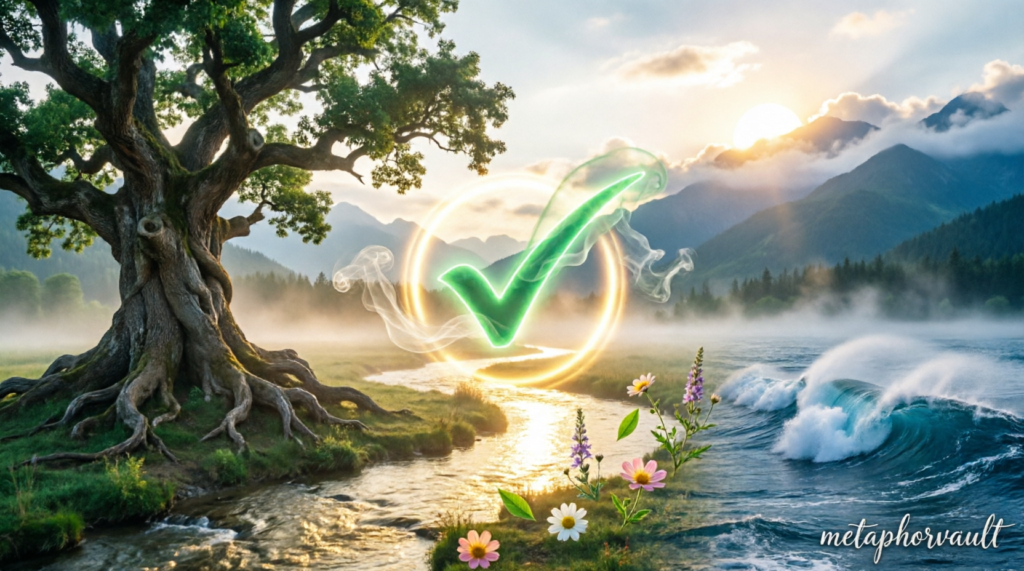
Metaphors in nature are figures of speech that compare a person, feeling, idea, or situation to something found in the natural world without using words like “as” or “like.” They help people express emotions, describe experiences, and paint vivid mental pictures using familiar parts of nature such as trees, rivers, mountains, seasons, flowers, and storms.
Unlike literal descriptions, these expressions give deeper meaning by connecting everyday life with the natural world. Since almost everyone understands nature, these metaphors are easy to recognize and remember.
They appear in:
- Everyday conversations
- Literature
- Poetry
- Public speaking
- Movies
- Song lyrics
- Motivational writing
- Social media captions
Definition and Meaning
A nature metaphor compares something directly to an element of nature.
Instead of saying someone is very strong, you might say:
“She is a mountain.”
The person is not actually a mountain. The mountain represents strength, stability, and resilience.
Simple Definition
A metaphor in nature is a direct comparison that uses something from nature to explain a person, emotion, idea, or situation.
Quick Explanation
Nature gives people familiar images that make abstract ideas easier to understand.
For example:
- Rivers suggest movement.
- Trees suggest growth.
- Flowers suggest beauty.
- Storms suggest problems.
- Sunshine suggests happiness.
Summary Table
| Term | Meaning |
|---|---|
| Nature metaphor | A comparison using elements of nature |
| Purpose | Makes ideas easier to imagine |
| Common subjects | Trees, rivers, mountains, oceans, flowers, animals, weather, seasons |
| Used in | Writing, speech, stories, conversations, media |
| Tone | Can be formal, informal, or poetic |
Why We Use Metaphors in Nature
People naturally connect emotions and experiences with the world around them. Nature provides familiar images that help explain complex ideas without using complicated words.
Some common reasons include:
- Make writing more memorable.
- Express emotions clearly.
- Create vivid mental pictures.
- Add beauty to language.
- Explain difficult ideas simply.
- Make speeches more engaging.
- Improve storytelling.
- Add personality to conversations.
Nature metaphors also appear in professional communication. A manager might describe a new project as “planting seeds for future success.” Friends may say someone “weathered the storm” after facing challenges. Even short social media captions often use natural imagery because it feels relatable and meaningful.
Examples of Metaphors in Nature
Below are 30 common and meaningful nature metaphors. Each one includes its meaning, an example sentence, and the tone where it fits best.
| Expression | Meaning | Example Sentence | Tone |
|---|---|---|---|
| Life is a journey. | Life is full of experiences and change. | Life is a journey, so enjoy every step. | Neutral |
| She is a blooming flower. | She is growing into her full potential. | After college, she became a blooming flower. | Neutral |
| He is a rock. | He is dependable and strong. | During difficult times, Dad was our rock. | Neutral |
| Time is a river. | Time keeps moving forward. | Time is a river that never stops flowing. | Formal |
| Their friendship is a deep-rooted tree. | Their relationship is stable and lasting. | Their friendship is a deep-rooted tree that has survived every challenge. | Neutral |
| Her mind is an ocean. | She has deep thoughts and wisdom. | Her mind is an ocean full of creative ideas. | Formal |
| Hope is a sunrise. | Hope brings new beginnings. | After months of uncertainty, hope became a sunrise. | Neutral |
| His anger is a wildfire. | His anger spreads quickly and intensely. | One small mistake turned his anger into a wildfire. | Informal |
| The city is a jungle. | The city feels competitive and difficult. | Finding a job there is like surviving because the city is a jungle. | Informal |
| Her smile is sunshine. | Her smile brings happiness. | Her smile is sunshine on stressful days. | Informal |
| The classroom was a beehive. | Everyone was busy and active. | Before the science fair, the classroom was a beehive. | Neutral |
| Ideas are seeds. | Good ideas can grow into something valuable. | Today’s ideas are the seeds of tomorrow’s success. | Formal |
| His voice was thunder. | His voice sounded powerful. | His voice was thunder across the room. | Neutral |
| The meeting hit a storm. | The discussion became difficult. | Budget concerns meant the meeting hit a storm. | Professional |
| She is a guiding star. | She provides direction and inspiration. | My grandmother has always been a guiding star. | Formal |
| Their love is an evergreen tree. | Their love remains strong over time. | After forty years, their love is an evergreen tree. | Neutral |
| His patience is a mountain. | He is extremely patient. | Teaching children requires patience, and his patience is a mountain. | Neutral |
| Dreams are wings. | Dreams help people move toward goals. | Dreams are wings that carry us forward. | Inspirational |
| The team is a forest. | Everyone works together while remaining unique. | A successful team is a forest, not a single tree. | Professional |
| She is a gentle breeze. | She has a calm and peaceful personality. | Her kindness is a gentle breeze after a stressful day. | Neutral |
| His words were rain. | His words brought comfort or relief. | After weeks of worry, his encouragement was rain. | Neutral |
| Opportunity is a seedling. | New opportunities need care to grow. | Treat every opportunity like a seedling. | Formal |
| Fear is a dark cloud. | Fear can block clear thinking. | Fear became a dark cloud over his confidence. | Neutral |
| Knowledge is a growing tree. | Learning continues throughout life. | Knowledge is a growing tree that never stops expanding. | Formal |
| Success is a mountain climb. | Success takes effort and persistence. | Building a business is a mountain climb. | Professional |
| Failure is winter. | Difficult times do not last forever. | Failure is winter before the next spring. | Inspirational |
| Kindness is a garden. | Kindness grows when people care for it. | Every small act helps kindness become a beautiful garden. | Neutral |
| The future is the horizon. | The future is full of possibility. | The future is the horizon waiting to be explored. | Neutral |
| Curiosity is a flowing stream. | Curiosity keeps learning moving. | A child’s curiosity is a flowing stream. | Neutral |
| Memories are autumn leaves. | Memories naturally collect over time. | Old memories are autumn leaves scattered through our lives. | Reflective |
Quick Reference Table
| Nature Metaphor | Simple Meaning | Tone |
|---|---|---|
| Life is a journey | Life changes over time | Neutral |
| Blooming flower | Personal growth | Neutral |
| Rock | Strength and support | Neutral |
| River | Continuous movement | Formal |
| Tree | Stability and growth | Neutral |
| Ocean | Depth and wisdom | Formal |
| Sunrise | New beginning | Neutral |
| Wildfire | Rapid emotion | Informal |
| Jungle | Tough environment | Informal |
| Sunshine | Happiness | Informal |
| Beehive | Busy activity | Neutral |
| Seeds | Future potential | Formal |
| Thunder | Powerful voice | Neutral |
| Storm | Difficult situation | Professional |
| Guiding star | Leadership | Formal |
| Evergreen tree | Lasting love | Neutral |
| Mountain | Patience or strength | Neutral |
| Wings | Ambition | Inspirational |
| Forest | Teamwork | Professional |
| Gentle breeze | Calm personality | Neutral |
| Rain | Comfort | Neutral |
| Seedling | New opportunity | Formal |
| Dark cloud | Worry or fear | Neutral |
| Growing tree | Lifelong learning | Formal |
| Mountain climb | Hard-earned success | Professional |
| Winter | Temporary hardship | Inspirational |
| Garden | Growing kindness | Neutral |
| Horizon | Future possibilities | Neutral |
| Flowing stream | Continuous curiosity | Neutral |
| Autumn leaves | Lasting memories | Reflective |
Real-Life Conversations
Conversation 1: Friends Talking
Emma: You finally started your own business. How does it feel?
Ryan: Exciting and scary at the same time.
Emma: Every big dream starts small. You’re just planting seeds.
Ryan: I hope they grow.
Emma: They will. Success is a mountain climb, not a single step.
Ryan: Thanks. I needed to hear that.
Conversation 2: Workplace Discussion
Manager: This project has hit a storm, but we still have a clear direction.
Employee: Should we change our plan?
Manager: Only where needed. Think of today’s ideas as seeds for next year’s growth.
Employee: That makes sense. We’ll focus on the long-term results.
Manager: Exactly. Strong teams grow like a healthy forest—everyone contributes in different ways.
Everyday Usage
Nature metaphors appear almost everywhere because they make ideas easy to picture and remember.
In everyday conversations, people often describe feelings by saying someone is a rock, that a problem is a storm, or that a new opportunity is a seed. These expressions sound natural because they connect life to familiar experiences in nature.
In writing, authors use nature metaphors to add emotion and create stronger images. A simple sentence becomes more memorable when it compares hope to a sunrise or knowledge to a growing tree.
On social media, short captions often include nature metaphors because they quickly express emotions. Phrases such as new beginnings, weathering the storm, or keep growing are common on Instagram, Facebook, and text messages.
In professional communication, leaders use these expressions to encourage teamwork, describe progress, and explain long-term goals without sounding overly formal.
Common Mistakes
| Mistake | Reason | Correct Version |
|---|---|---|
| Mixing too many metaphors in one sentence | It confuses the reader. | Use one clear metaphor at a time. |
| Taking a metaphor literally | Metaphors describe ideas, not facts. | Focus on the symbolic meaning. |
| Choosing unrelated nature images | The comparison may not make sense. | Pick an image that clearly matches the idea. |
| Using the same metaphor repeatedly | Repetition makes writing feel dull. | Vary your expressions naturally. |
| Forcing poetic language into casual conversation | It can sound unnatural. | Match the metaphor to the situation and audience. |
| Using unfamiliar metaphors without context | Readers may misunderstand the message. | Choose widely recognized expressions or explain them briefly. |
Related Terms
Nature metaphors are often confused with other figures of speech. Although they are similar, they work differently.
| Term | How It Differs from Nature Metaphors |
| Simile | Compares using like or as instead of making a direct comparison. Example: She is as calm as the ocean. |
| Personification | Gives human qualities to nature or objects. Example: The wind whispered through the trees. |
| Symbolism | Uses an object or element to represent a larger idea throughout a story or piece of writing, rather than in a single comparison. |
Understanding these differences helps you recognize figurative language more accurately and choose the right expression when speaking or writing.
Frequently Asked Questions
What are metaphors in nature?
Metaphors in nature are direct comparisons that use natural elements such as rivers, trees, mountains, flowers, seasons, or weather to explain people, emotions, ideas, or experiences. They make language more vivid and easier to understand.
Why are nature metaphors so popular?
People easily relate to nature because they experience it every day. Comparing life to rivers, storms, or gardens creates clear mental pictures that make ideas more memorable and emotionally meaningful.
Are nature metaphors only used in poetry?
No. While poets use them often, nature metaphors also appear in everyday conversations, books, speeches, movies, classrooms, workplaces, and social media posts. Many common expressions people use daily are based on nature.
What’s the difference between a metaphor and a simile?
A metaphor makes a direct comparison, such as Hope is a sunrise. A simile compares using words like like or as, such as Hope shines like the morning sun. Both create imagery, but they are structured differently.
Can I use nature metaphors in professional writing?
Yes. Simple nature metaphors can make presentations, emails, and speeches more engaging. Expressions like planting the seeds of success or weathering the storm are widely understood and work well when used in moderation.
How can I create my own nature metaphor?
Start with the idea you want to describe. Then think of a natural object or event that shares the same quality. For example, steady progress might be compared to a flowing river, while resilience could be compared to a mountain.
Are some nature metaphors universal?
Many are widely understood because nature is familiar across cultures. However, certain plants, animals, or landscapes may carry different meanings depending on local traditions, beliefs, or history.
How do I know if a nature metaphor fits naturally?
Choose a comparison that clearly supports your message and matches the tone of the situation. If readers can immediately understand the connection without extra explanation, the metaphor is likely a good fit.
Final Thoughts
Nature gives us some of the strongest images for expressing thoughts and emotions. A simple comparison to a river, mountain, tree, or sunrise can make ordinary language more meaningful and memorable.
By understanding how nature metaphors work and practicing them in everyday conversations and writing, you’ll communicate with greater clarity and creativity. Start with familiar expressions, experiment with new ones, and you’ll soon find that the natural world offers endless inspiration for bringing your ideas to life.
descover more post
25+Personal Metaphors Ways to Describe Yourself 2026
27+Metaphors Describing Yourself Creative Examples 2026
28+Metaphors in Art Examples That Reveal Hidden …

Anderson is the founder and lead content writer at MetaphorVault.com, where he specializes in creating engaging, easy-to-understand content about metaphors, idioms, figurative language, and modern English expressions. With over 8 years of experience in content writing and language education, he is passionate about making complex language concepts simple and practical for readers of all levels. His work focuses on delivering accurate, well-researched, and reader-friendly articles that help students, writers, educators, and English learners improve their communication skills. Through MetaphorVault.com, Anderson is committed to publishing high-quality, informative content that is both engaging and trustworthy.