
You’re trying to describe the wind, but words like strong or breezy just don’t paint the picture. That’s where a good metaphor can make all the difference.
Wind may be invisible, but it can whisper through the trees, roar like a wild beast, or sweep across the sky with surprising force. The right metaphor helps readers imagine not just how the wind moves, but how it feels.
In this guide, you’ll find 30 creative metaphors for wind, along with simple meanings, real examples, and easy-to-understand explanations. Whether you’re writing a story, poem, school assignment, or just looking for a better way to describe a windy day, you’ll find plenty of ideas to use.
What Are Metaphors for Wind?
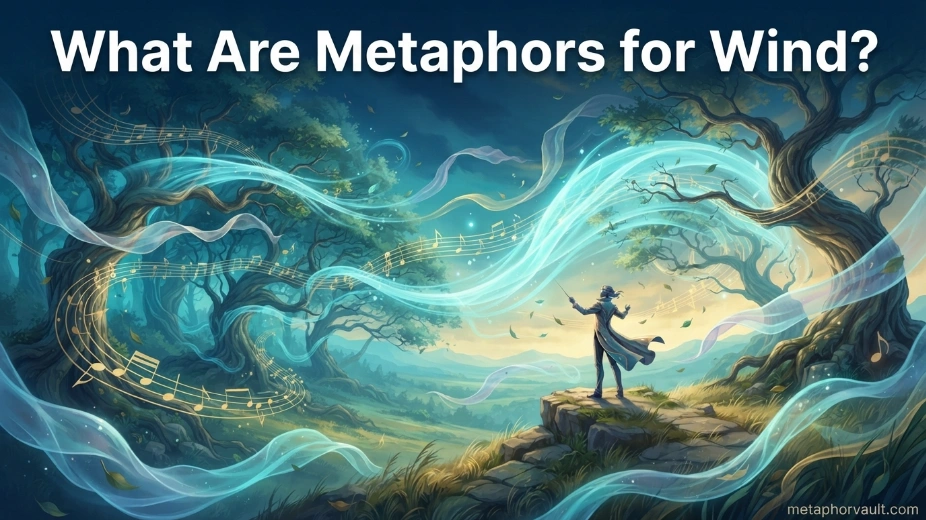
Metaphors for wind are creative expressions that describe the wind by comparing it to something else without using words like “as” or “like.” They help readers imagine the wind’s movement, sound, strength, or feeling in a more vivid way. Writers use them to make descriptions more emotional, colorful, and memorable.
Unlike a scientific description, a metaphor focuses on the experience of the wind rather than the weather itself. A strong wind can become a wild horse, a whisper, or even an invisible dancer, depending on the mood you want to create.
Why We Use Metaphors for Wind
Wind is something we can feel but cannot see. Because of that, it can be difficult to describe with plain words. Metaphors make those descriptions easier to picture.
People use wind metaphors to:
- Create emotion by making scenes feel peaceful, exciting, lonely, or frightening.
- Paint clearer images that help readers imagine the setting.
- Add personality to nature by treating the wind as if it were alive.
- Make writing memorable with fresh and interesting descriptions.
- Express feelings indirectly, since wind often symbolizes change, freedom, mystery, or time passing.
You can find these metaphors in many places, including:
- Fiction and short stories
- Poetry
- Children’s books
- Movie dialogue
- Song lyrics
- Graduation speeches
- Social media captions
- Personal journals
- Creative classroom assignments
Metaphors for Wind With Meanings Examples and Tone
1. The Wind Is a Whisper
Meaning: The wind moves softly and quietly.
Example sentence: The wind was a whisper through the pine trees before sunrise.
Tone: Neutral
2. The Wind Is a Dancing Spirit
Meaning: The wind moves lightly and gracefully.
Example sentence: A dancing spirit twirled across the open meadow.
Tone: Poetic
3. The Wind Is a Wild Horse
Meaning: The wind is fast, powerful, and difficult to control.
Example sentence: The wild horse raced across the empty plains all afternoon.
Tone: Neutral
4. The Wind Is Nature’s Messenger
Meaning: The wind seems to carry news, change, or memories.
Example sentence: Nature’s messenger brought the smell of rain before the storm arrived.
Tone: Formal
5. The Wind Is an Invisible Painter
Meaning: The wind changes the appearance of the world.
Example sentence: The invisible painter brushed waves across the wheat field.
Tone: Neutral
6. The Wind Is a Curious Child
Meaning: The wind explores every corner playfully.
Example sentence: The curious child slipped through every open window.
Tone: Informal
7. The Wind Is a Restless Traveler
Meaning: The wind never stays in one place.
Example sentence: The restless traveler wandered from the hills to the sea.
Tone: Neutral
8. The Wind Is a Gentle Friend
Meaning: The breeze feels comforting and peaceful.
Example sentence: A gentle friend cooled our faces during the afternoon hike.
Tone: Warm
9. The Wind Is a Hungry Wolf
Meaning: The wind feels fierce and threatening.
Example sentence: The hungry wolf howled around the mountain cabin all night.
Tone: Dramatic
10. The Wind Is a Silent Musician
Meaning: The wind creates natural sounds.
Example sentence: The silent musician played through the tall bamboo.
Tone: Poetic
11. The Wind Is an Invisible River
Meaning: Air flows continuously in one direction.
Example sentence: An invisible river carried the falling leaves downstream through the sky.
Tone: Neutral
12. The Wind Is a Storyteller
Meaning: The wind seems to carry memories from distant places.
Example sentence: The storyteller filled the valley with forgotten voices.
Tone: Poetic
13. The Wind Is a Sculptor
Meaning: Wind slowly shapes the land.
Example sentence: The sculptor carved smooth patterns into the desert sand.
Tone: Formal
14. The Wind Is a Thief
Meaning: The wind quietly takes things away.
Example sentence: The thief stole my hat before I noticed.
Tone: Neutral
15. The Wind Is a Drumbeat
Meaning: Strong wind creates steady, powerful sounds.
Example sentence: The drumbeat echoed against the old lighthouse.
Tone: Dramatic
16. The Wind Is a Dancer
Meaning: The wind moves with smooth, graceful motion.
Example sentence: The dancer swayed through the blooming flowers.
Tone: Neutral
17. The Wind Is a Painter’s Brush
Meaning: Wind creates beautiful natural movement.
Example sentence: The painter’s brush swept across the lake, creating tiny ripples.
Tone: Poetic
18. The Wind Is a Ghost
Meaning: The wind feels mysterious or eerie.
Example sentence: A ghost wandered through the abandoned streets.
Tone: Dramatic
19. The Wind Is a Singer
Meaning: The wind produces beautiful natural sounds.
Example sentence: The singer filled the forest with a quiet melody.
Tone: Neutral
20. The Wind Is a Runner
Meaning: The wind moves quickly from place to place.
Example sentence: The runner crossed the fields before sunset.
Tone: Informal
21. The Wind Is a Blanket
Meaning: Warm wind surrounds everything gently.
Example sentence: A soft blanket wrapped the beach on a summer evening.
Tone: Warm
22. The Wind Is a Giant
Meaning: The wind feels huge and overwhelming.
Example sentence: The giant shook the trees with incredible force.
Tone: Dramatic
23. The Wind Is a Mirror
Meaning: The wind reflects the mood of nature.
Example sentence: The mirror revealed the calm of the quiet morning.
Tone: Poetic
24. The Wind Is a Clock
Meaning: The changing wind marks the passing of time.
Example sentence: The clock reminded farmers that another season had arrived.
Tone: Formal
25. The Wind Is a Teacher
Meaning: The wind teaches patience, strength, or change.
Example sentence: The teacher reminded sailors to respect the sea.
Tone: Inspirational
26. The Wind Is a River of Air
Meaning: The wind flows steadily across the landscape.
Example sentence: The river of air drifted over the rolling hills.
Tone: Neutral
27. The Wind Is a Silver Ribbon
Meaning: The breeze moves in a smooth, flowing path.
Example sentence: A silver ribbon curled through the valley at dawn.
Tone: Poetic
28. The Wind Is an Artist
Meaning: The wind creates beauty wherever it goes.
Example sentence: The artist decorated the snow with delicate patterns.
Tone: Neutral
29. The Wind Is a Voice
Meaning: The wind seems to speak to people.
Example sentence: The voice called softly through the canyon.
Tone: Reflective
30. The Wind Is a Doorway
Meaning: The wind signals a new beginning or change.
Example sentence: The doorway opened to a fresh season full of hope.
Tone: Inspirational
Quick Reference Table
| Metaphor | Meaning | Tone |
|---|---|---|
| Whisper | Soft, quiet movement | Neutral |
| Dancing Spirit | Graceful motion | Poetic |
| Wild Horse | Powerful and uncontrollable | Neutral |
| Nature’s Messenger | Brings change or news | Formal |
| Invisible Painter | Changes the landscape | Neutral |
| Curious Child | Playful movement | Informal |
| Restless Traveler | Always moving | Neutral |
| Gentle Friend | Comforting breeze | Warm |
| Hungry Wolf | Fierce, dangerous wind | Dramatic |
| Silent Musician | Creates natural sounds | Poetic |
| Invisible River | Continuous flow | Neutral |
| Storyteller | Carries memories | Poetic |
| Sculptor | Shapes the land | Formal |
| Thief | Takes things away | Neutral |
| Drumbeat | Strong rhythmic force | Dramatic |
| Dancer | Smooth movement | Neutral |
| Painter’s Brush | Creates beauty | Poetic |
| Ghost | Mysterious feeling | Dramatic |
| Singer | Musical sound | Neutral |
| Runner | Fast movement | Informal |
| Blanket | Warm, gentle air | Warm |
| Giant | Huge strength | Dramatic |
| Mirror | Reflects mood | Poetic |
| Clock | Marks changing seasons | Formal |
| Teacher | Symbol of life’s lessons | Inspirational |
| River of Air | Steady flow | Neutral |
| Silver Ribbon | Smooth, elegant movement | Poetic |
| Artist | Creates natural beauty | Neutral |
| Voice | Speaks through nature | Reflective |
| Doorway | Symbol of new beginnings | Inspirational |
Real-Life Conversations
Conversation 1: Friends Talking About the Weather
Emma: Did you go hiking this morning?
Jake: I did. The wind was a gentle friend for most of the trail. It kept us cool without being too strong.
Emma: That sounds nice. It got much windier this afternoon.
Jake: It sure did. By the time we reached the top, the wind turned into a wild horse. We could barely keep our hats on.
Emma: That’s exactly how it felt in town. One minute it was calm, and the next it was pushing everything around.
Conversation 2: Team Meeting at Work
Manager: How did the outdoor event go yesterday?
Event Coordinator: Overall, it went well. Early in the day, the wind was a whisper, so everything stayed in place.
Manager: And later?
Event Coordinator: Around noon, the wind became a hungry wolf. We had to secure the banners and move a few displays indoors.
Manager: Good thinking. I’m glad the team acted quickly.
Everyday Usage of Wind Metaphors
You don’t have to be a poet to use metaphors for wind. They appear naturally in many kinds of communication.
In Everyday Conversation
People often use simple wind metaphors to make a story more interesting.
Examples:
- “The wind was a thief that stole my umbrella.”
- “That breeze was a gentle friend after our long walk.”
These expressions help listeners picture the moment instead of hearing a plain weather report.
In Creative Writing
Stories and poems use wind metaphors to build mood without long descriptions.
For example:
- A peaceful scene might describe the wind as a whisper or a dancer.
- A suspenseful scene may call it a ghost or a hungry wolf.
The metaphor instantly tells readers how the setting feels.
On Social Media
Short, creative captions often use wind metaphors because they’re memorable.
Examples:
- “The wind carried my worries away.“
- “Today’s breeze felt like nature’s hug.“
- “Chasing sunsets with the wind as my guide.“
These captions add personality without needing many words.
In Speeches and Presentations
Speakers sometimes describe wind as a symbol of change, hope, or opportunity.
For example:
- “The wind of change is opening new doors.”
- “Every challenge is a fresh wind pushing us forward.”
These expressions make ideas feel more inspiring and easier to remember.
Common Mistakes When Using Wind Metaphors
| Mistake | Reason | Correct Version |
|---|---|---|
| Mixing several metaphors in one sentence | Too many comparisons confuse the reader. | Choose one clear metaphor for each idea. |
| Using a metaphor that doesn’t match the mood | A playful metaphor won’t fit a scary scene. | Pick a metaphor that supports the emotion. |
| Explaining the metaphor too much | Overexplaining removes its impact. | Let the image speak for itself. |
| Repeating the same metaphor throughout a piece | Frequent repetition makes writing predictable. | Use different metaphors where appropriate. |
| Treating metaphors as literal facts | Readers know metaphors are symbolic, not factual. | Use them only for description or emotion. |
| Choosing overly complex comparisons | Difficult images interrupt the flow. | Prefer simple, familiar comparisons. |
Related Terms
Wind metaphors are closely connected to other figures of speech, but they aren’t the same thing.
| Term | How It Differs from Wind Metaphors | Example |
|---|---|---|
| Simile | Compares using like or as. | The wind moved like a dancer. |
| Personification | Gives human actions or feelings to the wind. | The wind laughed through the trees. |
| Symbolism | Uses wind to represent a larger idea rather than describe it. | The wind represents freedom or change. |
Knowing the difference helps you choose the right technique for your writing. A metaphor creates a direct comparison, while similes, personification, and symbolism each work in their own unique way.
Frequently Asked Questions
What is the best metaphor for wind?
It depends on the feeling you want to create. The wind is a whisper works well for calm moments, while the wind is a wild horse or a hungry wolf fits a powerful storm.
Are wind metaphors and similes the same?
No. A metaphor says the wind is something else, while a simile compares it using like or as. For example, The wind is a dancer is a metaphor, but The wind moves like a dancer is a simile.
Why do writers use metaphors for wind?
They help readers see and feel the scene instead of just reading a plain description. A strong metaphor makes the wind more memorable and adds emotion to your writing.
Can I use wind metaphors in school essays?
Yes, as long as they fit the topic. They’re especially useful in creative writing, descriptive essays, personal narratives, and poetry.
Are wind metaphors used in everyday speech?
They are. Common expressions like the winds of change show that people use wind metaphors in everyday conversations without even thinking about it.
How do I choose the right wind metaphor?
Start by thinking about the mood. Gentle images work best for peaceful scenes, while bold, energetic metaphors fit storms or fast-paced action.
Can wind symbolize emotions?
Yes. Depending on the context, wind can represent freedom, change, hope, uncertainty, loneliness, or even a fresh start.
Should I use many metaphors in one paragraph?
Usually not. One well-chosen metaphor creates a stronger image than several mixed together and keeps your writing clear and natural.
Final Thoughts
Metaphors for wind help transform an invisible force into something readers can easily imagine. Whether the wind becomes a whisper, a wild horse, a storyteller, or a gentle friend, the right comparison adds feeling and depth without making your writing complicated.
Start with simple, natural metaphors that match the mood of your scene, then experiment with more creative ideas as your confidence grows.
With thoughtful use, these expressions can make stories, poems, speeches, and everyday writing more vivid, engaging, and memorable.
Discover More Post
28+Metaphors for Cold That Make Your Writing Stronger 2026

Kovien is an experienced English language researcher, editor, and digital content strategist at MetaphorVault.com. He earned a Bachelor’s degree in English Language and Literature and has spent more than 5 years creating educational resources that simplify figurative language, metaphors, idioms, and modern English usage. His expertise combines linguistic knowledge with practical SEO writing, allowing him to produce content that is both informative and engaging. Kovien enjoys transforming complex language concepts into clear, relatable explanations supported by real-world examples. His work is driven by a commitment to accuracy, originality, and continuous learning. Through MetaphorVault.com, he aims to help readers build stronger communication skills and gain greater confidence in understanding and using the English language.