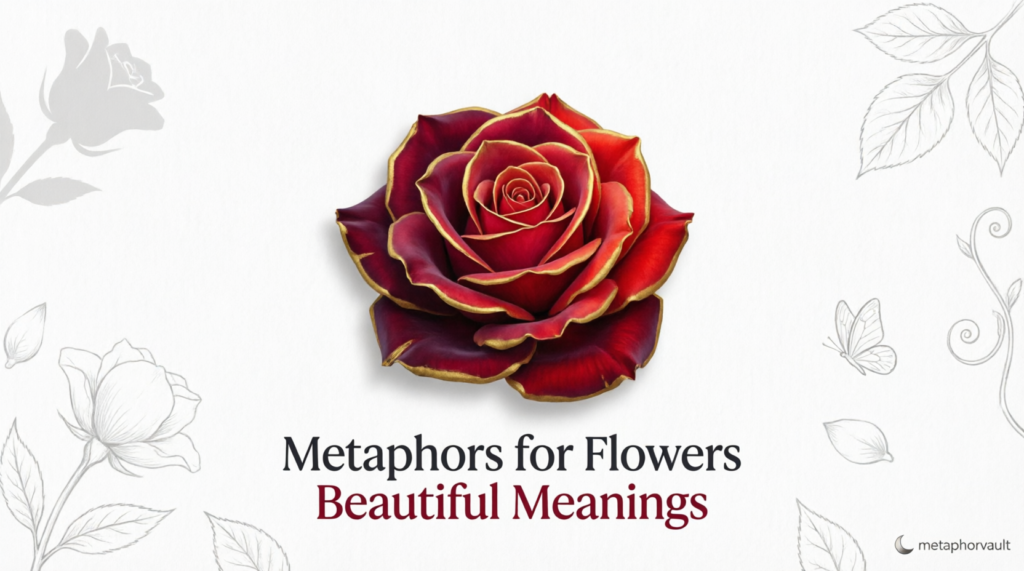
Flowers have a way of saying what ordinary words sometimes cannot. A rose can suggest love, a sunflower can feel like happiness, and a field of wildflowers can remind us of freedom. That is why people often search for metaphors for flowers when they need a creative way to describe beauty, growth, hope, love, sadness, or life.
A metaphor compares one thing to another without using “like” or “as.” So, instead of saying, “The flowers were beautiful,” you might say, “The garden was a living painting.” The flowers are not literally a painting, but the comparison helps the reader see their beauty.
You may find flower metaphors in poems, novels, school assignments, wedding speeches, greeting cards, social media captions, songs, and personal messages. They can make simple writing feel warmer and more memorable.
This guide, for 2026, gives you more than 60 flower metaphors with clear meanings, natural sentences, usage tips, tone, and difficulty levels. You will also learn how to choose the right metaphor for love, hope, beauty, growth, friendship, sadness, and other ideas.
Definition & Meaning
A metaphor for flowers is a creative comparison that describes flowers, gardens, or what flowers represent by connecting them to another idea. Flowers may be described as stars, smiles, jewels, dreams, or symbols of life to make language more vivid and emotional.
Simple Definition
A flower metaphor gives a flower a symbolic identity that it does not literally have.
For example:
“The garden was a rainbow.”
The garden is not actually a rainbow. The metaphor suggests that its many bright colors made it feel like one.
Another example is:
“Her smile was a sunflower.”
A smile cannot literally be a sunflower. The comparison suggests warmth, brightness, and happiness.
Quick Explanation
Flower metaphors can describe more than physical beauty. They can represent:
- Love
- Hope
- Growth
- Youth
- Friendship
- Kindness
- Beauty
- Happiness
- Memories
- Loss
- Renewal
- Strength
- Freedom
- Dreams
- Life
Quick Summary Table
| Flower metaphor idea | What it suggests | Common use |
|---|---|---|
| Flowers are smiles | Happiness and warmth | Captions, poetry |
| Flowers are stars | Beauty and wonder | Poetry |
| Garden is a painting | Color and beauty | Description |
| Flowers are jewels | Precious beauty | Formal writing |
| Flower is a dream | Wonder and imagination | Poetry |
| Flowers are whispers | Softness and peace | Literary writing |
| Garden is a sanctuary | Safety and calm | Personal writing |
| Flower is a promise | Hope and commitment | Love writing |
| Flowers are memories | Nostalgia | Poetry |
| Garden is a classroom | Learning and growth | Educational writing |
| Flower is a warrior | Strength and survival | Inspirational writing |
| Flowers are lanterns | Light and hope | Poetry |
| Flower is a crown | Pride and beauty | Creative writing |
| Garden is a tapestry | Rich variety | Description |
| Flowers are blessings | Gratitude | Religious or personal writing |
Why We Use Metaphors for Flowers
We use flower metaphors because they turn a simple description into an image, feeling, or idea that readers can quickly understand. They are useful when ordinary words feel too plain, especially in poetry, stories, school writing, speeches, captions, cards, personal messages, and creative descriptions.
Practical Purpose
The sentence “The flowers were beautiful” gives information.
The sentence “The flowers were jewels scattered across the garden” gives the reader an image.
That difference is the main power of metaphor.
A good flower metaphor helps readers see and feel the subject rather than simply understand it.
Everyday Usage
People naturally use flower metaphors when talking about emotions and people.
You might hear:
- “Her kindness is a flower.”
- “Their friendship blossomed.”
- “His confidence is finally blooming.”
- “That memory is a faded flower.”
- “Hope was a small flower in the darkness.”
These expressions are easy to understand because flowers already carry strong cultural meanings.
Writing
Flower metaphors work especially well in:
- Poems
- Short stories
- Personal essays
- Descriptive paragraphs
- Novels
- Speeches
- Wedding writing
- Greeting cards
- Journal entries
Instead of listing adjectives, a metaphor can create a complete picture in just a few words.
Speaking
Metaphors can make everyday speech more expressive.
For example, instead of saying:
“She has become more confident.”
You could say:
“She has finally bloomed.”
The second sentence feels warmer and more personal.
School
Students often use flower metaphors in:
- Creative writing
- Poetry assignments
- Essays
- Descriptive writing
- Graduation speeches
- Literary analysis
A simple metaphor is often better than a complicated one. The goal is not to impress the reader with difficult words. The goal is to create a clear image.
Social Media
Flower metaphors are also common in:
- Instagram captions
- Facebook posts
- X posts
- Pinterest content
- Personal blogs
- Wedding posts
For example:
“Bloom where life plants you.”
This short metaphor can express resilience and personal growth.
Professional Communication
Metaphors can work in professional settings, but they should be used carefully.
For example:
“Our team has become a garden where new ideas can grow.”
This may work well in a speech or presentation.
In a technical report, however, a direct sentence may be clearer.
Main Section
The best flower metaphors connect flowers with familiar ideas such as beauty, hope, love, growth, light, memories, and strength. The 60+ examples below cover different emotions and situations, so you can choose an expression that fits your exact purpose instead of using the same flower metaphor every time.
1. Flowers Are Smiles of the Earth
Meaning: Flowers represent happiness, warmth, and natural beauty.
Real explanation: This metaphor treats flowers as if the earth itself is smiling. It works because colorful flowers can make a landscape feel cheerful.
Sample sentence:
“The spring garden was filled with the smiles of the earth.”
When to use it: Use it for spring writing, nature descriptions, poems, and cheerful captions.
When NOT to use it: Avoid it when you need a serious or highly technical tone.
Alternatives:
- Nature’s smiles
- The earth’s laughter
- Little signs of joy
Difficulty: Easy
Tone: Warm, poetic, informal
2. Flowers Are Stars on the Ground
Meaning: Flowers are compared to stars because both can be bright, beautiful, and scattered across a wide space.
Real explanation: This metaphor works especially well for fields covered with small flowers.
Sample sentence:
“Wildflowers were stars on the ground beneath the morning sun.”
When to use it: Use it in poems, travel writing, stories, and nature descriptions.
When NOT to use it: Avoid it if the flowers are not visually spread across an area.
Alternatives:
- Earthbound stars
- Grounded constellations
- Stars beneath our feet
Difficulty: Easy
Tone: Poetic, neutral
3. The Garden Is a Living Painting
Meaning: A garden is presented as a work of art filled with color and detail.
Real explanation: Different flowers create colors, shapes, and patterns much like an artist creates a painting.
Sample sentence:
“After the rain, the garden became a living painting.”
When to use it: Use it for descriptive writing and photography captions.
When NOT to use it: Avoid repeating it too often in the same piece.
Alternatives:
- A natural masterpiece
- A canvas of color
- Nature’s artwork
Difficulty: Easy
Tone: Neutral, poetic
4. Flowers Are Jewels of the Garden
Meaning: Flowers are precious and beautiful.
Real explanation: Calling flowers jewels emphasizes their color, rarity, and visual value.
Sample sentence:
“Red roses were the jewels of the quiet garden.”
When to use it: Use it for elegant descriptions, wedding writing, and poetry.
When NOT to use it: Avoid it when describing plain or deliberately rough scenery.
Alternatives:
- Garden treasures
- Natural gems
- Petaled jewels
Difficulty: Easy
Tone: Elegant, poetic
5. A Flower Is a Tiny Sun
Meaning: A bright flower can represent warmth, energy, and happiness.
Real explanation: This metaphor is especially effective for yellow or orange flowers such as sunflowers.
Sample sentence:
“Each yellow flower was a tiny sun shining through the grass.”
When to use it: Use it for cheerful descriptions.
When NOT to use it: Avoid it if the flower is dark or associated with sadness in your context.
Alternatives:
- Little suns
- Pocket-sized suns
- Drops of sunlight
Difficulty: Easy
Tone: Cheerful, poetic
6. Flowers Are Nature’s Confetti
Meaning: Flowers represent celebration and joy.
Real explanation: Confetti is thrown during celebrations, while flowers can make nature look festive.
Sample sentence:
“Spring scattered nature’s confetti across the hillside.”
When to use it: Use it for spring, festivals, celebrations, and happy captions.
When NOT to use it: Avoid it in solemn writing.
Alternatives:
- Nature’s celebration
- Petal confetti
- A floral celebration
Difficulty: Easy
Tone: Playful, informal
7. The Garden Is a Rainbow
Meaning: A colorful garden is compared with a rainbow.
Real explanation: The metaphor highlights the many colors found among different flowers.
Sample sentence:
“The garden was a rainbow of roses, tulips, and lilies.”
When to use it: Use it when describing colorful flower beds.
When NOT to use it: Avoid it when the garden has only one color.
Alternatives:
- A sea of colors
- A color palette
- A rainbow of petals
Difficulty: Easy
Tone: Bright, neutral
8. Flowers Are Whispers of Spring
Meaning: Flowers are gentle signs that spring has arrived.
Real explanation: The word “whispers” suggests something quiet, soft, and gradual.
Sample sentence:
“The first crocuses were whispers of spring after a long winter.”
When to use it: Use it for seasonal writing and poetry.
When NOT to use it: Avoid it if you want a loud, energetic image.
Alternatives:
- Signs of spring
- Spring’s soft voice
- Hints of warmer days
Difficulty: Moderate
Tone: Gentle, poetic
9. A Flower Is a Promise
Meaning: A flower can represent hope, commitment, or something beautiful yet to come.
Real explanation: A blooming flower can suggest that something positive is beginning.
Sample sentence:
“The first bud was a promise of brighter days.”
When to use it: Use it for hope, relationships, recovery, or new beginnings.
When NOT to use it: Avoid it when the context has no connection to hope or expectation.
Alternatives:
- A sign of hope
- A quiet pledge
- A promise of renewal
Difficulty: Moderate
Tone: Emotional, poetic
10. Flowers Are Nature’s Poetry
Meaning: Flowers express beauty and emotion without using spoken words.
Real explanation: Poetry often uses images and feelings, and flowers can create the same effect visually.
Sample sentence:
“The wildflowers were nature’s poetry written across the valley.”
When to use it: Use it in poems, essays, and reflective writing.
When NOT to use it: Avoid it in very technical writing.
Alternatives:
- Poems of nature
- Silent poetry
- Verses of color
Difficulty: Moderate
Tone: Literary, poetic
11. The Flower Is a Sleeping Dream
Meaning: A closed flower is compared with a dream waiting to unfold.
Real explanation: A flower bud slowly opens, making it a useful symbol for possibility.
Sample sentence:
“The unopened rose was a sleeping dream waiting for morning.”
When to use it: Use it for potential, childhood, hope, or mystery.
When NOT to use it: Avoid it when you need a direct description.
Alternatives:
- A hidden dream
- A waiting promise
- A dream in a bud
Difficulty: Moderate
Tone: Poetic, emotional
12. Flowers Are Lanterns in the Grass
Meaning: Bright flowers appear to provide light in a natural landscape.
Real explanation: The metaphor works especially well for bright flowers seen against green grass.
Sample sentence:
“Yellow flowers stood like lanterns in the grass.”
When to use it: Use it for visual descriptions.
When NOT to use it: Avoid it for flowers that are difficult to see.
Alternatives:
- Lights among the grass
- Natural lanterns
- Little lights of the field
Difficulty: Easy
Tone: Poetic
13. A Garden Is a Sanctuary
Meaning: A garden is a peaceful and safe place.
Real explanation: A sanctuary is a place of refuge. A quiet garden can provide emotional rest.
Sample sentence:
“After a difficult day, her garden became a sanctuary.”
When to use it: Use it for peaceful spaces and emotional writing.
When NOT to use it: Avoid it if the garden is noisy or chaotic.
Alternatives:
- A place of peace
- A natural refuge
- A quiet haven
Difficulty: Easy
Tone: Calm, neutral
14. Flowers Are Little Pieces of Heaven
Meaning: Flowers are described as extraordinarily beautiful or peaceful.
Real explanation: This metaphor gives flowers a sense of wonder and spiritual beauty.
Sample sentence:
“The white lilies looked like little pieces of heaven.”
When to use it: Use it in spiritual, emotional, or reflective writing.
When NOT to use it: Avoid it if the audience prefers strictly secular language.
Alternatives:
- Drops of paradise
- Heavenly treasures
- Small pieces of beauty
Difficulty: Easy
Tone: Emotional, spiritual
15. The Rose Is a Love Letter
Meaning: A rose can communicate romantic love without words.
Real explanation: Roses have a strong cultural connection with romance and affection.
Sample sentence:
“The red rose was a love letter he never had the courage to write.”
When to use it: Use it for romance and emotional storytelling.
When NOT to use it: Avoid it when describing a rose purely botanically.
Alternatives:
- A message of love
- A silent confession
- A letter written in petals
Difficulty: Moderate
Tone: Romantic, poetic
16. Flowers Are the Heartbeats of a Garden
Meaning: Flowers make a garden feel alive.
Real explanation: A heartbeat is a sign of life, so flowers become the living center of the garden.
Sample sentence:
“The bright blossoms were the heartbeats of the old garden.”
When to use it: Use it for emotional descriptions.
When NOT to use it: Avoid it when the garden is meant to appear lifeless or abandoned.
Alternatives:
- The garden’s pulse
- Signs of life
- Living sparks
Difficulty: Moderate
Tone: Emotional, poetic
17. A Flower Is a Story in Bloom
Meaning: A flower represents a story, memory, or experience unfolding.
Real explanation: Blooming can symbolize development, making this metaphor useful for personal growth.
Sample sentence:
“Her life was a story in bloom.”
When to use it: Use it for biographies, graduation writing, and personal essays.
When NOT to use it: Avoid it if you only need a physical description.
Alternatives:
- A story unfolding
- A life in bloom
- A chapter opening
Difficulty: Moderate
Tone: Reflective, poetic
18. Flowers Are Nature’s Smiles
Meaning: Flowers symbolize happiness and friendliness.
Real explanation: Their bright colors and open shapes can resemble expressions of joy.
Sample sentence:
“Wildflowers were nature’s smiles along the road.”
When to use it: Use it for travel writing, captions, and cheerful descriptions.
When NOT to use it: Avoid it in serious academic writing unless discussing metaphor itself.
Alternatives:
- Nature’s happiness
- Smiles in the field
- Little signs of joy
Difficulty: Easy
Tone: Warm, informal
19. The Garden Is a Tapestry
Meaning: A garden is made from many colors, shapes, and textures woven together.
Real explanation: A tapestry combines many threads into one design. A mixed garden works in much the same way.
Sample sentence:
“The garden was a tapestry of purple, yellow, pink, and white.”
When to use it: Use it for rich visual descriptions.
When NOT to use it: Avoid it for a single flower.
Alternatives:
- A woven landscape
- A patchwork of color
- A natural mosaic
Difficulty: Moderate
Tone: Literary, neutral
20. Flowers Are Colorful Thoughts
Meaning: Flowers are presented as visible expressions of ideas or feelings.
Real explanation: This metaphor connects inner thoughts with the colors and forms of flowers.
Sample sentence:
“The garden seemed filled with colorful thoughts.”
When to use it: Use it for abstract or reflective writing.
When NOT to use it: Avoid it if your audience needs literal clarity.
Alternatives:
- Thoughts in bloom
- Ideas in color
- Visible emotions
Difficulty: Moderate
Tone: Creative, poetic
21. A Flower Is a Brave Survivor
Meaning: A flower can symbolize resilience.
Real explanation: Flowers that grow through cracks, poor soil, or harsh weather can represent strength.
Sample sentence:
“The tiny flower was a brave survivor pushing through the concrete.”
When to use it: Use it for resilience and inspirational writing.
When NOT to use it: Avoid it when the flower has not faced hardship.
Alternatives:
- A symbol of strength
- A survivor in bloom
- A tiny warrior
Difficulty: Easy
Tone: Inspirational
22. Flowers Are Soldiers of Spring
Meaning: Flowers are imagined as soldiers announcing the return of spring.
Real explanation: The metaphor gives flowers strength and purpose.
Sample sentence:
“Crocuses were the first soldiers of spring to appear after winter.”
When to use it: Use it for powerful seasonal descriptions.
When NOT to use it: Avoid it in gentle romantic writing if the military image feels too harsh.
Alternatives:
- Spring’s first warriors
- Flowers of renewal
- Nature’s spring army
Difficulty: Moderate
Tone: Strong, poetic
23. A Flower Is a Flame of Hope
Meaning: A flower represents hope during a difficult time.
Real explanation: The flower’s life and color become a small source of light.
Sample sentence:
“That single flower was a flame of hope in the ruined garden.”
When to use it: Use it for hardship, recovery, and inspirational writing.
When NOT to use it: Avoid it if the context is purely humorous.
Alternatives:
- A spark of hope
- A light of renewal
- Hope in bloom
Difficulty: Easy
Tone: Emotional, inspirational
24. Flowers Are Whispers of Love
Meaning: Flowers can quietly communicate affection.
Real explanation: Giving someone flowers often sends an emotional message without a spoken confession.
Sample sentence:
“The bouquet was a whisper of love at her doorstep.”
When to use it: Use it for romance, friendship, and heartfelt messages.
When NOT to use it: Avoid it when the flowers have a purely practical purpose.
Alternatives:
- Silent signs of affection
- Petals of love
- Quiet expressions of care
Difficulty: Easy
Tone: Romantic
25. A Garden Is a Book of Colors
Meaning: A garden contains many visual “chapters” made from different flowers.
Real explanation: The book metaphor suggests that every part of the garden tells something different.
Sample sentence:
“Every flower bed was a new page in the garden’s book of colors.”
When to use it: Use it in creative descriptions.
When NOT to use it: Avoid it when you need a very short, direct sentence.
Alternatives:
- A story of colors
- Pages of petals
- A colorful storybook
Difficulty: Moderate
Tone: Literary
26. Flowers Are Nature’s Fireworks
Meaning: Bright flowers create a visual celebration.
Real explanation: Like fireworks, flowers can bring bursts of color into a dark or plain landscape.
Sample sentence:
“The spring garden exploded with nature’s fireworks.”
When to use it: Use it for colorful, dramatic gardens.
When NOT to use it: Avoid it when describing delicate, quiet flowers.
Alternatives:
- Bursts of color
- Floral fireworks
- Explosions of bloom
Difficulty: Easy
Tone: Energetic, playful
27. A Flower Is a Candle of Peace
Meaning: A flower represents calm, remembrance, or peace.
Real explanation: A candle often symbolizes peace or remembrance, while a flower can carry similar emotional meaning.
Sample sentence:
“The white flower stood like a candle of peace beside the memorial.”
When to use it: Use it for reflective or memorial writing.
When NOT to use it: Avoid it in casual, humorous contexts.
Alternatives:
- A symbol of peace
- A quiet light
- A blossom of peace
Difficulty: Moderate
Tone: Serious, reflective
28. Flowers Are Memories in Color
Meaning: Flowers can bring old memories back to life.
Real explanation: Certain flowers, gardens, or scents can remind people of childhood, family, or past events.
Sample sentence:
“The roses were memories in color from her grandmother’s garden.”
When to use it: Use it for nostalgia and personal writing.
When NOT to use it: Avoid it when there is no emotional connection to the flowers.
Alternatives:
- Memories in bloom
- Colored memories
- Petals of the past
Difficulty: Moderate
Tone: Nostalgic, emotional
29. The Flower Is a Sleeping Secret
Meaning: A closed flower can represent something hidden.
Real explanation: A bud conceals its petals until it opens, making it a natural metaphor for mystery.
Sample sentence:
“The unopened bud was a sleeping secret in the morning garden.”
When to use it: Use it for mystery and anticipation.
When NOT to use it: Avoid it for a fully open flower unless the context is symbolic.
Alternatives:
- A hidden secret
- A mystery in bloom
- A secret waiting to open
Difficulty: Moderate
Tone: Mysterious, poetic
30. Flowers Are Dresses of the Earth
Meaning: Flowers make the earth look dressed in beautiful colors.
Real explanation: Petals become nature’s clothing in this playful metaphor.
Sample sentence:
“Spring dressed the earth in flowers.”
When to use it: Use it for seasonal writing and children’s creative writing.
When NOT to use it: Avoid it in formal technical writing.
Alternatives:
- Nature’s clothing
- The earth’s colorful dress
- Petaled clothing
Difficulty: Easy
Tone: Playful, poetic
31. A Flower Is a Smile After the Storm
Meaning: A flower represents hope after hardship.
Real explanation: The storm symbolizes difficulty, while the flower symbolizes the good that follows.
Sample sentence:
“The first blossom was a smile after the storm.”
When to use it: Use it for recovery and resilience.
When NOT to use it: Avoid it if the surrounding context has no difficulty or change.
Alternatives:
- Hope after hardship
- Joy after pain
- Light after darkness
Difficulty: Easy
Tone: Inspirational
32. Flowers Are Gifts from the Sun
Meaning: Flowers are presented as beautiful results of sunlight and nature.
Real explanation: Sunlight helps plants grow, so flowers can be imagined as gifts produced by the sun.
Sample sentence:
“The garden looked full of gifts from the sun.”
When to use it: Use it for sunny nature descriptions.
When NOT to use it: Avoid it for a dark, nighttime scene.
Alternatives:
- Gifts of sunlight
- Sunlit treasures
- The sun’s offerings
Difficulty: Easy
Tone: Warm, poetic
33. The Garden Is a Symphony
Meaning: A garden is made of many different parts working together beautifully.
Real explanation: A symphony combines many sounds, while a garden combines colors, scents, shapes, insects, and movement.
Sample sentence:
“The garden was a quiet symphony of color, scent, and birdsong.”
When to use it: Use it for rich descriptive writing.
When NOT to use it: Avoid it if the garden is being described only by one feature.
Alternatives:
- A natural orchestra
- A harmony of color
- Nature’s composition
Difficulty: Moderate
Tone: Literary
34. Flowers Are the Jewels of Morning
Meaning: Flowers are especially beautiful in the early morning.
Real explanation: Dew and soft morning light can make petals appear precious.
Sample sentence:
“Dew-covered roses were the jewels of morning.”
When to use it: Use it for sunrise or early-morning scenes.
When NOT to use it: Avoid it in nighttime descriptions.
Alternatives:
- Morning treasures
- Dewy gems
- Dawn’s jewels
Difficulty: Easy
Tone: Elegant
35. A Flower Is a Small Miracle
Meaning: A flower represents something surprisingly beautiful or precious.
Real explanation: The metaphor focuses on the wonder of growth and natural beauty.
Sample sentence:
“After months of care, the first bloom felt like a small miracle.”
When to use it: Use it for gardening, hope, and achievement.
When NOT to use it: Avoid overusing it for ordinary descriptions.
Alternatives:
- A little wonder
- A natural miracle
- A gift of life
Difficulty: Easy
Tone: Emotional, warm
36. Flowers Are Bottled Sunshine
Meaning: Bright flowers seem to contain sunlight.
Real explanation: Yellow, orange, and golden flowers can visually suggest captured sunlight.
Sample sentence:
“The sunflowers looked like bottles of sunshine.”
When to use it: Use it for cheerful captions and descriptions.
When NOT to use it: Avoid it for flowers that are very dark or pale.
Alternatives:
- Drops of sunshine
- Captured sunlight
- Sunshine in petals
Difficulty: Easy
Tone: Cheerful
37. The Garden Is a Playground for Butterflies
Meaning: A garden provides an active, joyful place for butterflies.
Real explanation: This metaphor gives the garden a lively personality.
Sample sentence:
“By noon, the garden had become a playground for butterflies.”
When to use it: Use it for lively nature writing.
When NOT to use it: Avoid it if there are no butterflies or similar activity.
Alternatives:
- A butterfly haven
- A playground of wings
- A paradise for butterflies
Difficulty: Easy
Tone: Playful
38. Flowers Are Footprints of Spring
Meaning: Flowers are signs left behind by the arrival of spring.
Real explanation: Footprints usually show that someone has passed through. Here, flowers show that spring has arrived.
Sample sentence:
“Tiny blossoms were footprints of spring across the meadow.”
When to use it: Use it for seasonal transitions.
When NOT to use it: Avoid it when discussing flowers unrelated to spring.
Alternatives:
- Signs of spring
- Tracks of spring
- Spring’s footsteps
Difficulty: Moderate
Tone: Poetic
39. A Flower Is a Pocket of Joy
Meaning: A flower contains or creates a small amount of happiness.
Real explanation: “Pocket” suggests something small that can be carried or discovered.
Sample sentence:
“Each balcony pot was a pocket of joy in the busy city.”
When to use it: Use it for urban gardens and positive writing.
When NOT to use it: Avoid it in very formal scientific contexts.
Alternatives:
- A little joy
- A small burst of happiness
- A piece of sunshine
Difficulty: Easy
Tone: Friendly
40. Flowers Are Nature’s Confessions
Meaning: Flowers express feelings that nature cannot literally speak.
Real explanation: A confession reveals something personal. Flowers can symbolically reveal beauty, love, or change.
Sample sentence:
“The roses were nature’s confessions of love.”
When to use it: Use it for poetry and romantic writing.
When NOT to use it: Avoid it for straightforward informational writing.
Alternatives:
- Nature’s secrets
- Silent confessions
- Petal-written feelings
Difficulty: Moderate
Tone: Romantic, poetic
41. A Garden Is a Blanket of Color
Meaning: A large area of flowers looks like a colorful blanket covering the ground.
Real explanation: This is especially effective for flower fields.
Sample sentence:
“Purple flowers formed a blanket of color across the hill.”
When to use it: Use it for fields and large flower beds.
When NOT to use it: Avoid it for a single flower pot.
Alternatives:
- A carpet of flowers
- A sea of color
- A colorful covering
Difficulty: Easy
Tone: Visual, neutral
42. Flowers Are Bottles of Perfume
Meaning: Flowers hold beautiful scents.
Real explanation: This metaphor focuses on fragrance rather than color.
Sample sentence:
“The evening garden seemed filled with bottles of perfume.”
When to use it: Use it when scent is an important part of the scene.
When NOT to use it: Avoid it for flowers without noticeable fragrance.
Alternatives:
- Natural perfume
- Fragrant treasures
- Bottles of scent
Difficulty: Easy
Tone: Sensory, poetic
43. The Rose Is a Red Heart
Meaning: A red rose represents love and deep emotion.
Real explanation: The color red and the shape of some roses connect naturally with the traditional symbol of a heart.
Sample sentence:
“The red rose was a heart growing quietly in the garden.”
When to use it: Use it for romantic writing.
When NOT to use it: Avoid it if romance is not appropriate to the context.
Alternatives:
- A heart in bloom
- A living heart
- Love in petals
Difficulty: Easy
Tone: Romantic
44. Flowers Are Tiny Teachers
Meaning: Flowers can teach people lessons about life.
Real explanation: Their growth, change, patience, and resilience can become symbols for human experience.
Sample sentence:
“The flowers were tiny teachers reminding her that growth takes time.”
When to use it: Use it in reflective and educational writing.
When NOT to use it: Avoid it when the comparison would distract from a technical lesson.
Alternatives:
- Lessons in bloom
- Teachers of nature
- Natural mentors
Difficulty: Moderate
Tone: Reflective
45. A Garden Is a Classroom of Life
Meaning: A garden teaches lessons about growth, patience, change, and care.
Real explanation: Gardening requires time and attention, making the garden a useful symbol for personal development.
Sample sentence:
“Her garden became a classroom of life.”
When to use it: Use it for essays, speeches, and inspirational writing.
When NOT to use it: Avoid it if the focus is purely botanical.
Alternatives:
- A school of nature
- A lesson in growth
- Life’s garden classroom
Difficulty: Easy
Tone: Reflective, inspirational
46. Flowers Are Pages of Summer
Meaning: Flowers represent moments or scenes from summer.
Real explanation: Flowers can become visual reminders of a season.
Sample sentence:
“The bright blossoms were pages of summer scattered through the yard.”
When to use it: Use it for memories and seasonal writing.
When NOT to use it: Avoid it if the flowers appear in winter.
Alternatives:
- Summer memories
- Pages of sunshine
- Chapters of summer
Difficulty: Moderate
Tone: Nostalgic
47. A Flower Is a Door to Beauty
Meaning: A flower provides a way to experience beauty.
Real explanation: A door leads somewhere, and the flower metaphorically leads the observer into a world of beauty.
Sample sentence:
“Every blossom was a small door to beauty.”
When to use it: Use it in poetic and reflective writing.
When NOT to use it: Avoid it when a literal description is needed.
Alternatives:
- A gateway to beauty
- An entrance to wonder
- A path to beauty
Difficulty: Moderate
Tone: Literary
48. Flowers Are Sparks of Life
Meaning: Flowers represent energy, vitality, and living growth.
Real explanation: A spark is small but powerful. Flowers can similarly signal that life is active and continuing.
Sample sentence:
“Tiny flowers were sparks of life among the dry stones.”
When to use it: Use it for resilience and nature writing.
When NOT to use it: Avoid it if the flowers are being described as fragile or dying.
Alternatives:
- Signs of life
- Living sparks
- Sparks of renewal
Difficulty: Easy
Tone: Inspirational
49. The Garden Is a Treasure Chest
Meaning: A garden contains many beautiful discoveries.
Real explanation: Different flowers can feel like treasures waiting to be found.
Sample sentence:
“Grandmother’s garden was a treasure chest of forgotten flowers.”
When to use it: Use it for childhood memories and discovery.
When NOT to use it: Avoid it when the garden is plain or empty.
Alternatives:
- A box of treasures
- A natural treasure house
- A chest of color
Difficulty: Easy
Tone: Warm, nostalgic
50. Flowers Are Soft Songs
Meaning: Flowers create a gentle emotional feeling similar to music.
Real explanation: The metaphor connects visual beauty with the peaceful effect of a soft song.
Sample sentence:
“The white flowers were soft songs beside the quiet path.”
When to use it: Use it for peaceful poetry and descriptions.
When NOT to use it: Avoid it for loud, energetic scenes.
Alternatives:
- Silent songs
- Songs in petals
- Gentle melodies of nature
Difficulty: Moderate
Tone: Calm, poetic
51. A Flower Is a Gentle Hug from Nature
Meaning: Flowers can make people feel comforted and cared for.
Real explanation: A hug suggests warmth and comfort, while flowers can create a similar emotional response.
Sample sentence:
“The little garden felt like a gentle hug from nature.”
When to use it: Use it for comfort, wellness, and personal writing.
When NOT to use it: Avoid it in formal technical writing.
Alternatives:
- Nature’s embrace
- A warm gift from nature
- A comforting bloom
Difficulty: Easy
Tone: Warm, friendly
52. Flowers Are Dreams with Petals
Meaning: Flowers are associated with imagination, beauty, and hope.
Real explanation: The metaphor makes flowers feel almost unreal or dreamlike.
Sample sentence:
“The garden was filled with dreams with petals.”
When to use it: Use it for poetry, fantasy, and romantic writing.
When NOT to use it: Avoid it in business communication.
Alternatives:
- Petaled dreams
- Dreams in bloom
- Blossoming dreams
Difficulty: Moderate
Tone: Dreamy, poetic
53. A Flower Is a Clock of the Seasons
Meaning: Flowers can show the changing seasons.
Real explanation: Different flowers bloom at different times, making them natural markers of seasonal change.
Sample sentence:
“The first daffodil was a clock announcing the arrival of spring.”
When to use it: Use it in nature writing and educational pieces.
When NOT to use it: Avoid it if the flower’s season is irrelevant.
Alternatives:
- A calendar of nature
- Nature’s clock
- A seasonal marker
Difficulty: Moderate
Tone: Educational, poetic
54. Flowers Are Bridges Between People
Meaning: Flowers can connect people emotionally.
Real explanation: Giving flowers can communicate love, thanks, sympathy, congratulations, or friendship.
Sample sentence:
“The bouquet became a bridge between two friends who had stopped speaking.”
When to use it: Use it for relationships and emotional stories.
When NOT to use it: Avoid it if flowers have no role in connecting people.
Alternatives:
- Bonds of affection
- Bridges of kindness
- Silent connections
Difficulty: Moderate
Tone: Emotional
55. A Flower Is a Quiet Warrior
Meaning: A flower represents strength without noise or aggression.
Real explanation: A flower may look delicate while surviving wind, cold, drought, or poor soil.
Sample sentence:
“The little wildflower was a quiet warrior on the rocky hillside.”
When to use it: Use it for resilience and overcoming challenges.
When NOT to use it: Avoid it if the flower is being used only for romance.
Alternatives:
- Silent survivor
- Gentle fighter
- Strong little bloom
Difficulty: Easy
Tone: Inspirational
56. Flowers Are Footnotes to Beauty
Meaning: Flowers add small but meaningful details to a beautiful scene.
Real explanation: A footnote adds extra information to a text. Flowers can similarly add finishing details to a landscape.
Sample sentence:
“Tiny flowers were footnotes to the beauty of the mountain.”
When to use it: Use it for literary descriptions.
When NOT to use it: Avoid it if flowers are actually the main focus.
Alternatives:
- Details of beauty
- Small touches of nature
- Finishing notes
Difficulty: Advanced
Tone: Literary
57. The Garden Is a Stage
Meaning: A garden is imagined as a stage where flowers, insects, birds, and sunlight perform.
Real explanation: The metaphor makes natural movement feel like a live performance.
Sample sentence:
“At sunrise, the garden became a stage for birds and flowers.”
When to use it: Use it for lively nature scenes.
When NOT to use it: Avoid it for a quiet, minimalist description.
Alternatives:
- Nature’s theater
- A natural stage
- A theater of life
Difficulty: Easy
Tone: Creative
58. Flowers Are Bells of Beauty
Meaning: Flowers announce or draw attention to beauty.
Real explanation: Bells make sound that calls attention. Flowers visually do something similar.
Sample sentence:
“The tulips were bells of beauty along the garden path.”
When to use it: Use it in poetic writing.
When NOT to use it: Avoid it if the metaphor feels too abstract for your audience.
Alternatives:
- Announcements of beauty
- Floral bells
- Calls to beauty
Difficulty: Advanced
Tone: Literary, poetic
59. A Flower Is a Breath of Hope
Meaning: A flower provides a small feeling of hope.
Real explanation: A breath is necessary for life. Combining it with hope makes the flower feel essential and life-giving.
Sample sentence:
“The first green shoot was a breath of hope after the fire.”
When to use it: Use it for recovery and difficult situations.
When NOT to use it: Avoid it for lighthearted captions where the emotional weight may feel too strong.
Alternatives:
- A breath of renewal
- A sign of hope
- Hope taking root
Difficulty: Moderate
Tone: Emotional, inspirational
60. Flowers Are Pearls of the Meadow
Meaning: Flowers are precious natural treasures scattered across a meadow.
Real explanation: Pearls suggest rarity, softness, and beauty.
Sample sentence:
“White daisies were pearls of the green meadow.”
When to use it: Use it for delicate flowers and peaceful landscapes.
When NOT to use it: Avoid it for a rough or dramatic setting.
Alternatives:
- Meadow jewels
- Natural pearls
- Pearls among the grass
Difficulty: Easy
Tone: Elegant, poetic
61. A Flower Is a Memory That Still Blooms
Meaning: A flower represents a memory that remains alive in someone’s heart.
Real explanation: This metaphor combines flowers with remembrance and continuing emotional connection.
Sample sentence:
“Her grandmother’s rose was a memory that still bloomed.”
When to use it: Use it for family memories, grief, anniversaries, and personal essays.
When NOT to use it: Avoid it when the writing has no connection to memory.
Alternatives:
- A living memory
- A memory in bloom
- The past still growing
Difficulty: Moderate
Tone: Emotional, nostalgic
62. Flowers Are Pages Written by the Sun
Meaning: Flowers are presented as natural stories created through sunlight and growth.
Real explanation: The metaphor combines books, writing, and sunlight to create a strong nature image.
Sample sentence:
“The meadow was filled with pages written by the sun.”
When to use it: Use it for creative writing and poetry.
When NOT to use it: Avoid it when simplicity is more important than imagery.
Alternatives:
- Stories written by sunlight
- Sunlit pages
- Nature’s written colors
Difficulty: Advanced
Tone: Literary
63. A Flower Is a Gift That Knows How to Bloom
Meaning: A flower represents natural beauty, growth, and the ability to become what it is meant to be.
Real explanation: The metaphor can also describe a person who develops with time.
Sample sentence:
“She was a gift that knew how to bloom.”
When to use it: Use it for personal growth, compliments, and inspirational writing.
When NOT to use it: Avoid it if you need a strictly literal meaning.
Alternatives:
- A gift in bloom
- Beauty unfolding
- A growing treasure
Difficulty: Moderate
Tone: Warm, inspirational
64. Flowers Are Little Flags of Life
Meaning: Flowers signal that life is present and continuing.
Real explanation: A flag can mark a place or announce something. Flowers can announce life in otherwise empty spaces.
Sample sentence:
“Tiny blossoms rose like little flags of life between the rocks.”
When to use it: Use it for resilience and natural landscapes.
When NOT to use it: Avoid it if the image is meant to be quiet and delicate.
Alternatives:
- Signs of life
- Banners of growth
- Flags of renewal
Difficulty: Easy
Tone: Inspirational
65. A Garden Is a Map of the Heart
Meaning: A garden can represent a person’s emotions, memories, and inner life.
Real explanation: Different flowers may represent different feelings, relationships, or memories.
Sample sentence:
“Her garden was a map of her heart, with every flower marking a memory.”
When to use it: Use it for personal essays, memoirs, and emotional poetry.
When NOT to use it: Avoid it for simple gardening instructions.
Alternatives:
- A portrait of the heart
- An emotional landscape
- A garden of memories
Difficulty: Moderate
Tone: Emotional, literary
66. Flowers Are Nature’s Little Blessings
Meaning: Flowers are viewed as gifts that bring joy and beauty.
Real explanation: The metaphor expresses gratitude for simple natural beauty.
Sample sentence:
“The flowers outside her window felt like nature’s little blessings.”
When to use it: Use it for gratitude, personal reflections, and positive captions.
When NOT to use it: Avoid it if religious or spiritual language is unsuitable for the audience.
Alternatives:
- Gifts from nature
- Small blessings
- Natural gifts
Difficulty: Easy
Tone: Warm, reflective
Quick Reference Table
| # | Metaphor | Main meaning | Best use | Difficulty | Tone |
|---|---|---|---|---|---|
| 1 | Smiles of the earth | Happiness | Nature writing | Easy | Warm |
| 2 | Stars on the ground | Beauty | Poetry | Easy | Poetic |
| 3 | Living painting | Color | Descriptions | Easy | Neutral |
| 4 | Jewels of the garden | Precious beauty | Elegant writing | Easy | Elegant |
| 5 | Tiny sun | Warmth | Captions | Easy | Cheerful |
| 6 | Nature’s confetti | Celebration | Social posts | Easy | Playful |
| 7 | Rainbow | Many colors | Descriptions | Easy | Bright |
| 8 | Whispers of spring | Seasonal change | Poetry | Moderate | Gentle |
| 9 | A promise | Hope | Inspirational writing | Moderate | Emotional |
| 10 | Nature’s poetry | Beauty | Poetry | Moderate | Literary |
| 11 | Sleeping dream | Potential | Creative writing | Moderate | Dreamy |
| 12 | Lanterns in the grass | Light | Nature writing | Easy | Poetic |
| 13 | Sanctuary | Peace | Personal writing | Easy | Calm |
| 14 | Pieces of heaven | Wonder | Reflection | Easy | Spiritual |
| 15 | Love letter | Romance | Love writing | Moderate | Romantic |
| 16 | Heartbeats of a garden | Life | Descriptive writing | Moderate | Emotional |
| 17 | Story in bloom | Growth | Essays | Moderate | Reflective |
| 18 | Nature’s smiles | Joy | Captions | Easy | Warm |
| 19 | Tapestry | Variety | Descriptions | Moderate | Literary |
| 20 | Colorful thoughts | Ideas and feelings | Poetry | Moderate | Creative |
| 21 | Brave survivor | Resilience | Inspirational writing | Easy | Strong |
| 22 | Soldiers of spring | Renewal | Seasonal poetry | Moderate | Powerful |
| 23 | Flame of hope | Hope | Inspirational writing | Easy | Emotional |
| 24 | Whispers of love | Affection | Romance | Easy | Romantic |
| 25 | Book of colors | Variety | Creative writing | Moderate | Literary |
| 26 | Nature’s fireworks | Celebration | Descriptions | Easy | Energetic |
| 27 | Candle of peace | Peace | Memorial writing | Moderate | Serious |
| 28 | Memories in color | Nostalgia | Personal essays | Moderate | Emotional |
| 29 | Sleeping secret | Mystery | Poetry | Moderate | Mysterious |
| 30 | Dresses of the earth | Seasonal beauty | Creative writing | Easy | Playful |
| 31 | Smile after the storm | Recovery | Inspirational writing | Easy | Hopeful |
| 32 | Gifts from the sun | Warmth | Nature writing | Easy | Warm |
| 33 | Symphony | Harmony | Descriptions | Moderate | Literary |
| 34 | Jewels of morning | Morning beauty | Poetry | Easy | Elegant |
| 35 | Small miracle | Wonder | Personal writing | Easy | Emotional |
| 36 | Bottled sunshine | Happiness | Captions | Easy | Cheerful |
| 37 | Playground for butterflies | Liveliness | Nature writing | Easy | Playful |
| 38 | Footprints of spring | Seasonal signs | Poetry | Moderate | Poetic |
| 39 | Pocket of joy | Happiness | Captions | Easy | Friendly |
| 40 | Nature’s confessions | Expression | Poetry | Moderate | Romantic |
| 41 | Blanket of color | Large field | Descriptions | Easy | Visual |
| 42 | Bottles of perfume | Fragrance | Sensory writing | Easy | Poetic |
| 43 | Red heart | Love | Romance | Easy | Romantic |
| 44 | Tiny teachers | Life lessons | Essays | Moderate | Reflective |
| 45 | Classroom of life | Growth | Speeches | Easy | Inspirational |
| 46 | Pages of summer | Memories | Poetry | Moderate | Nostalgic |
| 47 | Door to beauty | Wonder | Creative writing | Moderate | Literary |
| 48 | Sparks of life | Vitality | Inspirational writing | Easy | Strong |
| 49 | Treasure chest | Discovery | Memories | Easy | Warm |
| 50 | Soft songs | Peace | Poetry | Moderate | Calm |
| 51 | Gentle hug from nature | Comfort | Personal writing | Easy | Warm |
| 52 | Dreams with petals | Imagination | Poetry | Moderate | Dreamy |
| 53 | Clock of the seasons | Change | Educational writing | Moderate | Reflective |
| 54 | Bridges between people | Connection | Relationship writing | Moderate | Emotional |
| 55 | Quiet warrior | Strength | Inspirational writing | Easy | Strong |
| 56 | Footnotes to beauty | Detail | Literary writing | Advanced | Literary |
| 57 | Stage | Natural activity | Descriptions | Easy | Creative |
| 58 | Bells of beauty | Beauty | Poetry | Advanced | Literary |
| 59 | Breath of hope | Recovery | Inspirational writing | Moderate | Emotional |
| 60 | Pearls of the meadow | Delicate beauty | Nature writing | Easy | Elegant |
| 61 | Memory that still blooms | Remembrance | Personal writing | Moderate | Nostalgic |
| 62 | Pages written by the sun | Nature’s story | Poetry | Advanced | Literary |
| 63 | Gift that knows how to bloom | Growth | Personal writing | Moderate | Inspirational |
| 64 | Little flags of life | Survival | Nature writing | Easy | Inspirational |
| 65 | Map of the heart | Emotions | Personal essays | Moderate | Emotional |
| 66 | Little blessings | Gratitude | Captions | Easy | Warm |
Real-Life Conversations
Natural metaphors usually work best when they fit the emotion of the conversation. People do not normally speak in long strings of poetic comparisons. A single well-chosen metaphor can sound much more natural.
Conversation 1: Two Friends in a Garden
Maya: I never noticed how many flowers were here.
Lena: My grandmother planted most of them.
Maya: It feels like a living painting.
Lena: That’s exactly what she used to call it.
Maya: I can see why. Those yellow flowers look like tiny suns.
Lena: She always said the garden was supposed to make people happy.
Maya: It definitely works.
Conversation 2: Student and Teacher
Student: I need a metaphor for flowers in my poem.
Teacher: What feeling are you trying to show?
Student: Hope. The poem is about getting through a difficult time.
Teacher: Then think about what flowers do after winter.
Student: Maybe, “The flower was a flame of hope.”
Teacher: That’s a strong choice. It gives the flower a clear emotional role.
Student: I could also say, “The first flower was a smile after the storm.”
Teacher: Yes. That one feels especially natural for your poem.
Conversation 3: Family Memory
Son: Why did you keep this old rose bush?
Mother: Your grandmother planted it.
Son: I didn’t know that.
Mother: Every time it blooms, I think of her.
Son: So it’s more than a flower to you.
Mother: Much more. It’s a memory that still blooms.
Son: That’s beautiful.
Conversation 4: Romantic Conversation
Alex: I brought you something.
Sam: Flowers?
Alex: Just a small bouquet.
Sam: They’re beautiful.
Alex: I didn’t know how to say what I was feeling.
Sam: So the flowers said it for you?
Alex: I guess they did.
Sam: Then I understand the message.
Conversation 5: Office Conversation
Manager: The new team has made a lot of progress.
Jordan: They really have.
Manager: I think the team is becoming a garden where new ideas can grow.
Jordan: That’s a good way to put it.
Manager: Everyone brings something different.
Jordan: And together, the ideas are much stronger.
Everyday Usage
Flower metaphors appear in everyday communication because flowers are familiar symbols. A short comparison can express an emotion quickly, but the best metaphor depends on where you are using it. A phrase that sounds beautiful in a poem may feel strange in an office email, so match the imagery to your audience and purpose.
In Conversation
People often use simple flower metaphors when talking about personal growth or emotions.
For example:
“She has really bloomed since starting college.”
Here, “bloomed” means that she has developed, gained confidence, or become happier.
Another natural example is:
“Their friendship has blossomed.”
This means the friendship has grown stronger.
In Writing
Creative writers use flower metaphors to make descriptions more visual.
Plain:
“The garden was colorful.”
Metaphorical:
“The garden was a rainbow of petals.”
The second sentence gives readers something they can picture.
In Books
Authors may use flowers to represent characters, relationships, time, or change.
A young character might be described as a bud to suggest potential.
An older character might be connected with a fading flower to suggest aging or lost youth.
A garden can represent a character’s inner world.
The meaning depends on the surrounding story.
In Poetry
Poetry is one of the best places for flower metaphors because poems often depend on images and emotion.
For example:
“A tiny flower / held a flame of hope / beneath the winter sky.”
The flower does more than describe nature. It represents survival.
In Movies
Visual storytelling often uses flowers as symbols because viewers understand images quickly.
A bouquet may represent love.
A dying flower may suggest loss.
A blooming garden may represent a fresh beginning.
A single flower growing in an unexpected place may symbolize resilience.
In Emails
Flower metaphors can work in personal or creative emails, but they should be used sparingly in professional communication.
A workplace message might say:
“Our new ideas are beginning to bloom.”
That can sound friendly in a team update.
However, if you are writing a formal report, this is usually clearer:
“Our new ideas are beginning to develop.”
Choose the metaphor when it adds warmth rather than when it simply replaces a clear sentence.
In Text Messages
Text messages usually benefit from short metaphors.
Examples:
“You are a little ray of sunshine 🌻”
“Our friendship keeps blooming.”
“Sending you some flower-powered hope.”
The casual setting allows more playful language.
On Instagram
Instagram captions often use short, emotional flower metaphors.
Examples:
“Blooming at my own pace.”
“A little pocket of joy.”
“Growing through what I go through.”
“Wildflower energy.”
“Collecting little pieces of sunshine.”
Short metaphors work well because social media captions often need to communicate a mood quickly.
On Facebook
Facebook posts can use flower metaphors for memories, family, celebrations, and personal milestones.
For example:
“Some memories never fade. They keep blooming in the heart.”
This works well with a photograph of a family garden or an old bouquet.
On X
Short flower metaphors are especially effective on X because the message can stand alone.
Examples:
“Some seasons break you. Others teach you how to bloom.”
“Quiet growth is still growth.”
“Even small flowers can change a landscape.”
These expressions connect flowers with broader life lessons.
On LinkedIn
LinkedIn requires more care. A flower metaphor can work when discussing leadership, teamwork, creativity, or professional development.
For example:
“Good teams are gardens. People grow when they have trust, support, and room to contribute.”
This feels more natural in a leadership post than saying something overly romantic or poetic.
In School Assignments
Students can use flower metaphors to improve descriptive and creative writing.
For example:
“The meadow was a blanket of color.”
This is easy to understand and creates a clear visual image.
For a stronger personal essay, a student might write:
“My mother’s garden was a map of her heart, with every flower carrying a memory.”
The metaphor works because it connects the physical garden with an emotional idea.
Choosing the Right Flower Metaphor
The easiest way to choose a metaphor is to start with the idea, not the flower.
If your idea is love, consider:
- A love letter
- A red heart
- A whisper of love
- A bridge between people
If your idea is hope, consider:
- A flame of hope
- A breath of hope
- A promise
- A smile after the storm
If your idea is growth, consider:
- A story in bloom
- A classroom of life
- A gift that knows how to bloom
- A flower opening
If your idea is beauty, consider:
- Jewels of the garden
- Stars on the ground
- A living painting
- A rainbow
If your idea is strength, consider:
- A quiet warrior
- A brave survivor
- Soldiers of spring
- Sparks of life
If your idea is memory, consider:
- Memories in color
- A memory that still blooms
- Pages of summer
- A garden of memories
Metaphor vs. Simile for Flowers
A metaphor says one thing is another thing.
“The garden is a rainbow.”
A simile uses like or as.
“The garden is like a rainbow.”
Both create comparisons, but they have slightly different effects.
The metaphor is more direct and imaginative.
The simile is more explicit and easier for beginners to understand.
How to Make Your Own Flower Metaphor
Creating a new flower metaphor is easier than memorizing dozens of phrases.
Start with the flower or garden.
Then ask:
What does it look like?
Maybe it looks like stars, jewels, paint, fire, or a rainbow.
What does it make you feel?
Maybe it creates peace, joy, love, hope, or nostalgia.
What does it represent?
Maybe it represents growth, change, survival, youth, or memory.
Then connect the two ideas.
For example:
Flower + hope = flower is a promise.
Garden + color = garden is a rainbow.
Flower + strength = flower is a quiet warrior.
Flowers + memories = flowers are memories in color.
This method helps you create original metaphors instead of copying common phrases.
Final Tip for Using Flower Metaphors
The strongest metaphor is usually the one that feels natural in its context. You do not need a complicated comparison to make your writing powerful.
A simple phrase such as “hope in bloom” can sometimes say more than a long, elaborate description.
Use flower metaphors when you want readers to picture something, feel something, or connect a flower with a deeper idea. Keep the image clear, avoid mixing too many metaphors, and choose language that matches your audience.
A flower can be a smile, a star, a jewel, a memory, a promise, or a quiet warrior. The right metaphor depends on the story you want the flower to tell.
descover more post
29+ River Metaphors and What They Really Mean 2026
60+ Marriage Metaphors Meaning Examples and How to …
60+ Clock Metaphors Meaning Examples and How to Use …

Anderson is the founder and lead content writer at MetaphorVault.com, where he specializes in creating engaging, easy-to-understand content about metaphors, idioms, figurative language, and modern English expressions. With over 8 years of experience in content writing and language education, he is passionate about making complex language concepts simple and practical for readers of all levels. His work focuses on delivering accurate, well-researched, and reader-friendly articles that help students, writers, educators, and English learners improve their communication skills. Through MetaphorVault.com, Anderson is committed to publishing high-quality, informative content that is both engaging and trustworthy.