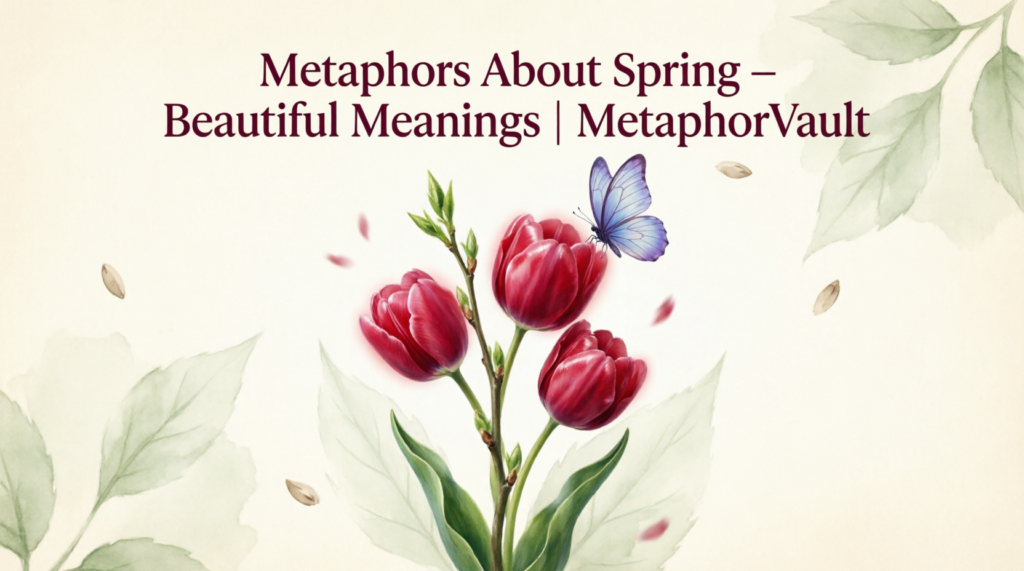
Spring is more than a season of warmer days and blooming flowers. It is a picture of new life, fresh hope, and second chances. After the cold and quiet months of winter, the world seems to wake up. Trees grow new leaves, birds return, and gardens fill with color. These changes make spring a powerful source of metaphors about growth, happiness, love, healing, and renewal.
A spring metaphor compares the season to something else without using “like” or “as.” For example, “Spring is a fresh start” compares spring to a new beginning. The words do not describe the season literally. Instead, they help readers feel its meaning.
People search for spring metaphors when they need creative ideas for poems, essays, stories, greeting cards, speeches, captions, or classroom assignments. They may also want to describe personal growth after a difficult time.
This guide, for 2026, explains the meaning of spring metaphors and provides more than 60 original examples. You will learn how to use them naturally, understand their emotional meanings, and choose the right expression for different situations.
Definition & Meaning
What are metaphors about spring?
Metaphors about spring are creative comparisons that describe the season as something else, such as a rebirth, a doorway, a song, or a fresh beginning. They use the changes of spring to express ideas about hope, beauty, growth, freedom, love, and recovery.
A metaphor does not say that spring literally becomes another object. It connects two ideas to create a deeper meaning.
For example:
“Spring is nature’s second chance.”
Spring does not actually receive a second chance. The metaphor means that nature begins again after winter.
Simple examples
| Spring metaphor | Meaning |
|---|---|
| Spring is a fresh start. | Spring represents a new beginning. |
| Spring is nature’s smile. | Spring brings beauty and happiness. |
| Spring is a green blanket. | New plants cover the land. |
| Spring is a door opening. | A new season of possibilities begins. |
| Spring is a gentle awakening. | Nature slowly becomes active again. |
Spring Metaphors About New Beginnings
1. Spring Is a Fresh Start
Meaning: Spring represents a new beginning after a difficult or quiet period.
Explanation: Just as nature begins growing again, people can begin again in life.
Sample sentence:
“Moving to a new city felt like stepping into spring.”
When to use it: Personal essays, speeches, conversations about change, and motivational writing.
When NOT to use it: Avoid it when you need to describe a literal weather event.
Alternatives: A new chapter; a clean slate; a second beginning.
Difficulty: Easy
Tone: Neutral
2. Spring Is Nature’s Second Chance
Meaning: Spring gives the natural world another opportunity to grow.
Explanation: Plants that seemed lifeless in winter begin producing leaves and flowers.
Sample sentence:
“Every April, the garden receives nature’s second chance.”
When to use it: Writing about recovery, nature, or hope.
When NOT to use it: Avoid using it as a literal scientific description.
Alternatives: A new opportunity; another beginning; a fresh opportunity.
Difficulty: Easy
Tone: Neutral
3. Spring Is an Open Door
Meaning: Spring creates possibilities for growth, movement, and change.
Explanation: The season feels like an invitation to leave behind old habits and try something new.
Sample sentence:
“Spring stood before her like an open door.”
When to use it: Stories, poems, personal reflections, and inspirational captions.
When NOT to use it: Avoid it when discussing a real door or entrance.
Alternatives: A new path; a fresh opportunity; a doorway to change.
Difficulty: Easy
Tone: Neutral
4. Spring Is a Blank Page
Meaning: Spring offers a chance to create something new.
Explanation: A blank page gives a writer room to begin. Spring gives life room to grow.
Sample sentence:
“The first warm day felt like a blank page waiting for adventure.”
When to use it: Creative writing, journaling, and graduation messages.
When NOT to use it: Avoid it if you need a specific factual description.
Alternatives: A clean slate; a new canvas; an unwritten chapter.
Difficulty: Easy
Tone: Neutral
5. Spring Is a New Chapter
Meaning: Spring marks the beginning of a different stage in life.
Explanation: Like a new chapter in a book, the season brings new events and experiences.
Sample sentence:
“After a difficult year, spring became a new chapter in her life.”
When to use it: Personal stories, essays, and speeches.
When NOT to use it: Avoid it when describing the physical pages of a book.
Alternatives: A fresh phase; a new beginning; a turning point.
Difficulty: Easy
Tone: Neutral
6. Spring Is a Sunrise
Meaning: Spring represents the beginning of something hopeful.
Explanation: A sunrise brings light after darkness, just as spring follows winter.
Sample sentence:
“His recovery was a sunrise after a long night.”
When to use it: Writing about hope, healing, and change.
When NOT to use it: Avoid it if you are specifically describing the time of day.
Alternatives: A new dawn; a bright beginning; the first light.
Difficulty: Easy
Tone: Neutral
7. Spring Is a Seed of Possibility
Meaning: Spring contains the potential for future growth.
Explanation: A seed may look small, but it can become a large plant. Spring suggests the same potential in life.
Sample sentence:
“Her first small idea was a seed of possibility.”
When to use it: Essays, business writing, and motivational messages.
When NOT to use it: Avoid it when the subject has no connection to growth or potential.
Alternatives: A spark of hope; a beginning of growth; a promising start.
Difficulty: Moderate
Tone: Neutral
8. Spring Is a Turning Page
Meaning: Spring marks a change from one stage to another.
Explanation: Turning a page moves a story forward. Spring moves nature into a new season.
Sample sentence:
“The arrival of spring was a turning page in the story of the year.”
When to use it: Poetry, reflective writing, and seasonal messages.
When NOT to use it: Avoid it when a simpler phrase would communicate the idea more clearly.
Alternatives: A change of season; a fresh stage; a new direction.
Difficulty: Easy
Tone: Neutral
9. Spring Is a New Beginning in Green
Meaning: Spring brings new life and fresh growth.
Explanation: The color green often represents plants, renewal, and energy.
Sample sentence:
“Spring arrived as a new beginning in green.”
When to use it: Nature writing, poems, and social media captions.
When NOT to use it: Avoid it in highly formal reports unless creative language is suitable.
Alternatives: A season of renewal; fresh life; nature reborn.
Difficulty: Moderate
Tone: Neutral
10. Spring Is a Second Sunrise
Meaning: Spring offers renewed hope after a dark or difficult period.
Explanation: A second sunrise suggests that light and opportunity have returned.
Sample sentence:
“Her return to school felt like a second sunrise.”
When to use it: Personal narratives, poetry, and speeches.
When NOT to use it: Avoid it when you need to explain the actual position of the sun.
Alternatives: A renewed beginning; another dawn; a fresh light.
Difficulty: Moderate
Tone: Neutral
Spring Metaphors About Growth and Renewal
11. Spring Is a Garden of Growth
Meaning: Spring encourages development and progress.
Explanation: Gardens grow when they receive light, water, and care. People also grow through effort and support.
Sample sentence:
“Her classroom became a garden of growth.”
When to use it: Education, personal development, and community writing.
When NOT to use it: Avoid it when discussing a literal garden.
Alternatives: A place to grow; fertile ground; a season of progress.
Difficulty: Easy
Tone: Neutral
12. Spring Is a Green Revolution
Meaning: Spring brings a powerful change in the appearance of nature.
Explanation: Bare branches and brown fields become green and full of life.
Sample sentence:
“Across the valley, spring began a green revolution.”
When to use it: Creative nature descriptions.
When NOT to use it: Avoid confusion with the historical agricultural Green Revolution when writing factual reports.
Alternatives: A wave of new growth; a green transformation; nature’s renewal.
Difficulty: Moderate
Tone: Neutral
13. Spring Is a Rising Garden
Meaning: Spring represents life emerging and developing.
Explanation: The image of a rising garden suggests plants pushing upward from the soil.
Sample sentence:
“Hope was a rising garden in her tired heart.”
When to use it: Poetry and emotional writing.
When NOT to use it: Avoid it in plain instructions or technical writing.
Alternatives: Growing hope; new life; a blooming future.
Difficulty: Moderate
Tone: Neutral
14. Spring Is a Green Ladder
Meaning: Spring helps life rise toward growth and light.
Explanation: New stems, branches, and leaves seem to reach upward.
Sample sentence:
“Every new leaf was a green ladder toward the sun.”
When to use it: Nature poetry and descriptive essays.
When NOT to use it: Avoid it when readers may think you mean an actual ladder.
Alternatives: A path upward; a staircase of growth; a climb toward light.
Difficulty: Moderate
Tone: Neutral
15. Spring Is a Growing Heart
Meaning: Spring represents emotional development and renewed feeling.
Explanation: A heart that grows becomes more open, caring, or hopeful.
Sample sentence:
“Her growing heart welcomed every new flower.”
When to use it: Writing about kindness, love, and emotional change.
When NOT to use it: Avoid it in medical or scientific descriptions.
Alternatives: An opening heart; a heart in bloom; growing affection.
Difficulty: Easy
Tone: Neutral
16. Spring Is a Rising Tide of Life
Meaning: Spring brings increasing energy and activity.
Explanation: A rising tide moves forward and covers more ground. Spring spreads life across the landscape.
Sample sentence:
“A rising tide of life moved through the sleeping forest.”
When to use it: Nature writing and powerful descriptions.
When NOT to use it: Avoid it if you are discussing an actual ocean tide.
Alternatives: A wave of life; a surge of growth; rising energy.
Difficulty: Moderate
Tone: Neutral
17. Spring Is a Green Fire
Meaning: Spring brings powerful energy through plants and new growth.
Explanation: Fire spreads quickly and strongly. The metaphor compares the spread of green leaves to that energy.
Sample sentence:
“A green fire swept across the hills.”
When to use it: Poetry and vivid landscape descriptions.
When NOT to use it: Avoid it in safety instructions or factual reports.
Alternatives: A burst of greenery; a wave of growth; living energy.
Difficulty: Moderate
Tone: Neutral
18. Spring Is a Young Tree
Meaning: Spring represents youth, potential, and growth.
Explanation: A young tree is still developing and has a future ahead.
Sample sentence:
“His new dream was a young tree reaching toward the sky.”
When to use it: Essays, stories, and motivational writing.
When NOT to use it: Avoid it if the comparison does not relate to development.
Alternatives: A growing dream; a new plant; fresh potential.
Difficulty: Easy
Tone: Neutral
19. Spring Is a River of Renewal
Meaning: Spring brings continuous change and fresh life.
Explanation: A river keeps moving, while renewal suggests restoration and growth.
Sample sentence:
“Spring flowed through the town as a river of renewal.”
When to use it: Poetry, speeches, and reflective writing.
When NOT to use it: Avoid it when describing a literal river.
Alternatives: A stream of new life; a flow of hope; a current of change.
Difficulty: Moderate
Tone: Neutral
20. Spring Is a Rising Song
Meaning: Spring brings increasing beauty, movement, and energy.
Explanation: A song that rises becomes stronger and more noticeable. Nature seems to do the same.
Sample sentence:
“The forest became a rising song of leaves and birds.”
When to use it: Poems, stories, and nature descriptions.
When NOT to use it: Avoid it in technical writing.
Alternatives: A growing melody; a chorus of life; nature’s music.
Difficulty: Moderate
Tone: Neutral
Spring Metaphors About Hope and Happiness
21. Spring Is a Smile from the Earth
Meaning: Spring makes the world seem happy and welcoming.
Explanation: Flowers, sunshine, and fresh grass create the image of a smiling planet.
Sample sentence:
“The meadow was a smile from the earth.”
When to use it: Children’s writing, poetry, and cheerful captions.
When NOT to use it: Avoid it in scientific explanations.
Alternatives: Nature’s smile; the earth’s joy; a happy landscape.
Difficulty: Easy
Tone: Informal
22. Spring Is a Light in the Window
Meaning: Spring offers comfort and hope after a difficult time.
Explanation: A light in a window can make someone feel welcome and safe.
Sample sentence:
“Her kindness was a light in the window during my winter.”
When to use it: Emotional writing, personal essays, and messages of support.
When NOT to use it: Avoid it if you are describing a literal window light.
Alternatives: A sign of hope; a welcoming light; a bright promise.
Difficulty: Easy
Tone: Neutral
23. Spring Is a Hopeful Letter
Meaning: Spring brings a positive message about the future.
Explanation: A letter can carry news, comfort, or encouragement. Spring seems to deliver the same message.
Sample sentence:
“Each new bud was a hopeful letter from nature.”
When to use it: Poetry, greeting cards, and creative writing.
When NOT to use it: Avoid it in formal communication that requires direct language.
Alternatives: A message of hope; a promise of better days; good news from nature.
Difficulty: Moderate
Tone: Neutral
24. Spring Is a Warm Embrace
Meaning: Spring brings comfort, welcome, and emotional warmth.
Explanation: Warmer weather can feel like being welcomed after a long cold period.
Sample sentence:
“The first sunny afternoon was a warm embrace.”
When to use it: Personal writing, poems, and affectionate captions.
When NOT to use it: Avoid it when you need an exact temperature description.
Alternatives: A gentle welcome; a comforting touch; nature’s hug.
Difficulty: Easy
Tone: Informal
25. Spring Is a Pocket Full of Sunshine
Meaning: Spring carries small moments of happiness.
Explanation: A pocket full of sunshine is an imaginary image of stored joy and warmth.
Sample sentence:
“She walked into the room with a pocket full of sunshine.”
When to use it: Children’s stories, cheerful captions, and friendly messages.
When NOT to use it: Avoid it in serious business reports.
Alternatives: A bundle of joy; a little brightness; a handful of happiness.
Difficulty: Easy
Tone: Informal
26. Spring Is a Window of Hope
Meaning: Spring allows people to see new possibilities.
Explanation: A window gives us a view beyond the room. Spring gives us a view beyond hardship.
Sample sentence:
“Spring opened a window of hope in his life.”
When to use it: Essays, speeches, and reflective writing.
When NOT to use it: Avoid it when the sentence concerns an actual window.
Alternatives: A glimpse of hope; a chance to begin; a brighter outlook.
Difficulty: Easy
Tone: Neutral
27. Spring Is a Laughing Meadow
Meaning: Spring makes nature appear joyful and lively.
Explanation: The meadow is not literally laughing. The metaphor gives the landscape a happy human quality.
Sample sentence:
“The laughing meadow welcomed the children.”
When to use it: Creative writing, children’s literature, and poetry.
When NOT to use it: Avoid it in scientific descriptions.
Alternatives: A joyful field; a cheerful landscape; a happy garden.
Difficulty: Easy
Tone: Informal
28. Spring Is a Bright Promise
Meaning: Spring suggests that good things may come.
Explanation: The season reminds people that change can lead to better days.
Sample sentence:
“The first flowers were a bright promise after the storm.”
When to use it: Inspirational writing, cards, and speeches.
When NOT to use it: Avoid it when you need to guarantee a specific future result.
Alternatives: A hopeful sign; a positive beginning; a promise of renewal.
Difficulty: Easy
Tone: Neutral
29. Spring Is a Golden Opportunity
Meaning: Spring represents a valuable chance to begin or improve something.
Explanation: The word “golden” suggests value and importance.
Sample sentence:
“The new season gave her a golden opportunity to start again.”
When to use it: Personal development, work messages, and school writing.
When NOT to use it: Avoid it when the opportunity has no real value or connection to change.
Alternatives: A valuable chance; a fresh opportunity; a moment to grow.
Difficulty: Easy
Tone: Neutral
30. Spring Is a Song of Joy
Meaning: Spring creates feelings of happiness and celebration.
Explanation: Birds, flowers, sunlight, and outdoor activity can feel like a joyful song.
Sample sentence:
“The garden became a song of joy beneath the morning sun.”
When to use it: Poetry, stories, and seasonal greetings.
When NOT to use it: Avoid it in formal reports that require literal language.
Alternatives: A celebration of life; a melody of happiness; nature’s cheerful music.
Difficulty: Easy
Tone: Neutral
Spring Metaphors About Beauty and Nature
31. Spring Is Nature’s Painter
Meaning: Spring fills the world with color.
Explanation: Flowers, leaves, and sunlight seem to paint the landscape.
Sample sentence:
“Nature’s painter covered the hills with yellow flowers.”
When to use it: Descriptive essays, poems, and travel writing.
When NOT to use it: Avoid it in literal descriptions of an artist.
Alternatives: The earth’s artist; a painter of flowers; nature’s brush.
Difficulty: Easy
Tone: Neutral
32. Spring Is a Green Blanket
Meaning: Spring covers the land with fresh plants and grass.
Explanation: A blanket spreads over a surface, just as greenery spreads over fields.
Sample sentence:
“Spring laid a green blanket across the valley.”
When to use it: Landscape descriptions and poetry.
When NOT to use it: Avoid it when discussing an actual blanket.
Alternatives: A carpet of green; a cover of leaves; a living carpet.
Difficulty: Easy
Tone: Neutral
33. Spring Is a Garden of Colors
Meaning: Spring brings many bright and beautiful colors.
Explanation: Flowers and fresh leaves make the landscape look like a colorful garden.
Sample sentence:
“The city park became a garden of colors.”
When to use it: Nature writing, captions, and school assignments.
When NOT to use it: Avoid it when the colors must be measured or described precisely.
Alternatives: A rainbow of flowers; a colorful canvas; a sea of blossoms.
Difficulty: Easy
Tone: Neutral
34. Spring Is a Floral Crown
Meaning: Spring makes the land look decorated and beautiful.
Explanation: A crown is worn as decoration. Flowers can seem to crown trees, fields, and hills.
Sample sentence:
“Wildflowers placed a floral crown on the mountain.”
When to use it: Poetry and artistic descriptions.
When NOT to use it: Avoid it in simple instructions.
Alternatives: A crown of blossoms; a flower-covered landscape; nature’s decoration.
Difficulty: Moderate
Tone: Neutral
35. Spring Is a Jewel Box
Meaning: Spring contains many beautiful natural sights.
Explanation: A jewel box holds valuable and colorful objects. Spring holds flowers, birds, and fresh leaves.
Sample sentence:
“The small garden was a jewel box of spring.”
When to use it: Travel writing, poetry, and descriptive essays.
When NOT to use it: Avoid it when discussing a real jewelry container.
Alternatives: A treasure chest of beauty; a collection of wonders; a natural treasure.
Difficulty: Moderate
Tone: Neutral
36. Spring Is a Living Painting
Meaning: Spring creates a beautiful scene that seems painted.
Explanation: The landscape changes through colors, shapes, and movement.
Sample sentence:
“The countryside became a living painting of green fields and pink trees.”
When to use it: Creative writing, photography captions, and travel descriptions.
When NOT to use it: Avoid it in technical reports.
Alternatives: A moving picture; a natural masterpiece; a colorful scene.
Difficulty: Easy
Tone: Neutral
37. Spring Is a Perfume in the Air
Meaning: Spring fills the air with the scents of flowers and fresh plants.
Explanation: The season can be imagined as a pleasant fragrance spreading around us.
Sample sentence:
“Spring was a perfume in the air after the rain.”
When to use it: Sensory writing and poetry.
When NOT to use it: Avoid it when discussing an actual perfume product.
Alternatives: A fragrance of renewal; nature’s scent; a breath of flowers.
Difficulty: Moderate
Tone: Neutral
38. Spring Is a Soft Brush
Meaning: Spring gently changes the appearance of nature.
Explanation: A soft brush creates delicate strokes. Spring adds gentle color and fresh life to the land.
Sample sentence:
“Spring used a soft brush to color the bare branches.”
When to use it: Poems, stories, and nature descriptions.
When NOT to use it: Avoid it in factual writing.
Alternatives: A gentle painter; a delicate touch; nature’s brushstroke.
Difficulty: Moderate
Tone: Neutral
39. Spring Is a Necklace of Flowers
Meaning: Flowers decorate the landscape like beautiful jewelry.
Explanation: A necklace can be made of many small pieces. A row of flowers can create a similar image.
Sample sentence:
“Daisies formed a necklace around the old garden.”
When to use it: Poetry and creative descriptions.
When NOT to use it: Avoid it when discussing actual jewelry.
Alternatives: A chain of blossoms; a garland of flowers; a floral border.
Difficulty: Moderate
Tone: Neutral
40. Spring Is a Painted Window
Meaning: Spring gives the world a colorful and beautiful view.
Explanation: A painted window changes how the outside world looks. Spring changes the appearance of the landscape.
Sample sentence:
“From the train, the countryside looked like a painted window.”
When to use it: Travel writing, poems, and storytelling.
When NOT to use it: Avoid it if you are describing a real stained-glass window.
Alternatives: A colorful view; a natural picture; a window of color.
Difficulty: Moderate
Tone: Neutral
Spring Metaphors About Love and Relationships
41. Spring Is Love in Bloom
Meaning: Spring represents love that is growing or becoming stronger.
Explanation: Flowers bloom as they develop. Love can also grow and open.
Sample sentence:
“Our friendship slowly became love in bloom.”
When to use it: Romantic writing, wedding cards, and relationship captions.
When NOT to use it: Avoid it in professional communication unless the context is clearly personal.
Alternatives: Growing love; a blooming romance; affection in flower.
Difficulty: Easy
Tone: Informal
42. Spring Is the Heart’s Garden
Meaning: Spring represents emotional warmth, love, and inner beauty.
Explanation: A garden needs care to grow. Relationships also need attention and kindness.
Sample sentence:
“Her kindness turned my heart into a garden.”
When to use it: Poems, love letters, and personal reflections.
When NOT to use it: Avoid it in formal workplace writing.
Alternatives: A garden of feelings; an open heart; a place of love.
Difficulty: Easy
Tone: Informal
43. Spring Is a Gentle Kiss
Meaning: Spring arrives softly and brings comfort.
Explanation: The first warm breeze or sunlight can feel like a gentle kiss.
Sample sentence:
“The morning breeze was spring’s gentle kiss.”
When to use it: Romantic poetry and affectionate captions.
When NOT to use it: Avoid it in formal writing or situations requiring emotional distance.
Alternatives: A soft welcome; a tender touch; a warm greeting.
Difficulty: Easy
Tone: Informal
44. Spring Is a New Romance
Meaning: Spring represents the beginning of love or affection.
Explanation: The season is often associated with fresh energy and emotional openness.
Sample sentence:
“Their first meeting felt like a new romance with life.”
When to use it: Creative writing, romantic captions, and stories.
When NOT to use it: Avoid it if the relationship is not romantic and the meaning could confuse readers.
Alternatives: A fresh love; a budding relationship; a new affection.
Difficulty: Easy
Tone: Informal
45. Spring Is a Love Letter from Nature
Meaning: Spring expresses beauty, warmth, and care through the natural world.
Explanation: A love letter communicates affection. Spring seems to send that feeling through flowers and sunlight.
Sample sentence:
“Every blooming tree was a love letter from nature.”
When to use it: Poems, greeting cards, and social media posts.
When NOT to use it: Avoid it in scientific reports.
Alternatives: Nature’s message of love; a gift from the earth; a floral greeting.
Difficulty: Easy
Tone: Neutral
46. Spring Is a Budding Friendship
Meaning: Spring represents a friendship that is beginning to grow.
Explanation: A bud is the early stage of a flower. A new friendship may also be at an early stage.
Sample sentence:
“Our budding friendship grew stronger each week.”
When to use it: Personal writing and friendly messages.
When NOT to use it: Avoid it when describing a long-established friendship.
Alternatives: A growing bond; a new connection; a friendship taking root.
Difficulty: Easy
Tone: Neutral
47. Spring Is a Shared Garden
Meaning: Spring can symbolize a relationship built through care and cooperation.
Explanation: A shared garden needs both people to care for it.
Sample sentence:
“Trust made their marriage a shared garden.”
When to use it: Relationship writing, wedding speeches, and personal essays.
When NOT to use it: Avoid it when the relationship does not involve mutual care.
Alternatives: A shared home; a growing bond; a relationship built together.
Difficulty: Moderate
Tone: Neutral
48. Spring Is a Heart Opening
Meaning: Spring represents becoming more loving, trusting, or emotionally open.
Explanation: A flower opens its petals, and a person may open their heart.
Sample sentence:
“Meeting her felt like my heart opening after years of winter.”
When to use it: Romantic writing and personal reflections.
When NOT to use it: Avoid it in formal reports or situations requiring literal language.
Alternatives: Emotional renewal; an open heart; a new sense of trust.
Difficulty: Easy
Tone: Neutral
Spring Metaphors About Healing and Recovery
49. Spring Is Healing Rain
Meaning: Spring represents comfort and recovery after hardship.
Explanation: Rain helps plants grow. In the metaphor, healing rain helps a person recover emotionally.
Sample sentence:
“Her friendship was healing rain after a difficult year.”
When to use it: Personal essays, poetry, and supportive messages.
When NOT to use it: Avoid it when describing actual rainfall amounts.
Alternatives: Restoring comfort; a source of healing; a gentle renewal.
Difficulty: Easy
Tone: Neutral
50. Spring Is a Bandage for Winter
Meaning: Spring brings relief after the cold and difficulty of winter.
Explanation: A bandage protects and helps an injury heal. Spring is imagined as covering winter’s damage.
Sample sentence:
“The warm days felt like a bandage for winter’s wounds.”
When to use it: Poetry and reflective writing.
When NOT to use it: Avoid it in medical writing because it is not a literal treatment.
Alternatives: A sign of recovery; comfort after hardship; nature’s healing touch.
Difficulty: Moderate
Tone: Neutral
51. Spring Is a Healing Hand
Meaning: Spring brings comfort and restoration.
Explanation: A gentle hand can help someone feel safe. Spring seems to soothe the land.
Sample sentence:
“Spring placed a healing hand over the tired fields.”
When to use it: Creative writing, poetry, and emotional messages.
When NOT to use it: Avoid it when discussing medical care.
Alternatives: A soothing touch; a restoring force; gentle recovery.
Difficulty: Easy
Tone: Neutral
52. Spring Is a Bridge from Pain to Peace
Meaning: Spring symbolizes the movement from difficulty toward calm.
Explanation: A bridge connects two places. Spring connects the cold past with a warmer future.
Sample sentence:
“Recovery became a bridge from pain to peace.”
When to use it: Personal narratives, speeches, and reflective essays.
When NOT to use it: Avoid it when the subject has no connection to change or recovery.
Alternatives: A path to peace; a step toward healing; a passage into calm.
Difficulty: Moderate
Tone: Neutral
53. Spring Is a Quiet Healer
Meaning: Spring brings gentle changes that help restore life.
Explanation: The season does not need to make a loud announcement. Its small changes gradually transform the world.
Sample sentence:
“Time became a quiet healer, much like spring.”
When to use it: Reflective writing and poetry.
When NOT to use it: Avoid using it as a guarantee that every emotional problem will disappear.
Alternatives: A gentle restorer; a slow renewal; a source of comfort.
Difficulty: Easy
Tone: Neutral
54. Spring Is a Breath After Winter
Meaning: Spring brings relief after a long, difficult period.
Explanation: A deep breath can feel freeing after stress. Spring offers a similar sense of relief.
Sample sentence:
“The first warm day was a breath after winter.”
When to use it: Essays, poems, and personal captions.
When NOT to use it: Avoid it when discussing breathing in a medical context.
Alternatives: A moment of relief; fresh air after hardship; a return to calm.
Difficulty: Easy
Tone: Neutral
55. Spring Is a Light Returning
Meaning: Spring represents hope coming back into someone’s life.
Explanation: Light returning after darkness suggests renewed energy and comfort.
Sample sentence:
“Her laughter was a light returning after a hard season.”
When to use it: Emotional writing, stories, and messages of encouragement.
When NOT to use it: Avoid it when describing actual daylight hours.
Alternatives: Renewed hope; returning joy; a brighter season.
Difficulty: Easy
Tone: Neutral
Spring Metaphors About Freedom and Change
56. Spring Is a Bird Leaving Its Cage
Meaning: Spring represents freedom and release.
Explanation: A bird leaving a cage suggests movement away from limits.
Sample sentence:
“Graduation felt like a bird leaving its cage.”
When to use it: Writing about freedom, education, and new opportunities.
When NOT to use it: Avoid it if the subject does not involve freedom or change.
Alternatives: A door to freedom; breaking free; open skies.
Difficulty: Easy
Tone: Neutral
57. Spring Is a Wind of Change
Meaning: Spring represents movement and transformation.
Explanation: Wind moves through the air, while change moves life in a new direction.
Sample sentence:
“A wind of change passed through the old neighborhood.”
When to use it: Essays, speeches, and personal stories.
When NOT to use it: Avoid it when discussing actual wind speed or weather data.
Alternatives: A new direction; a changing season; a fresh movement.
Difficulty: Easy
Tone: Neutral
58. Spring Is a Gate to the Open Sky
Meaning: Spring offers freedom, possibility, and wider experiences.
Explanation: An open sky suggests space without limits.
Sample sentence:
“Leaving home felt like a gate to the open sky.”
When to use it: Travel writing, graduation speeches, and personal reflections.
When NOT to use it: Avoid it when describing a literal gate.
Alternatives: A path to freedom; an open horizon; a world of possibilities.
Difficulty: Moderate
Tone: Neutral
59. Spring Is a Butterfly Breaking Free
Meaning: Spring represents transformation and freedom.
Explanation: A butterfly emerging from its earlier stage symbolizes change and development.
Sample sentence:
“Her confidence was a butterfly breaking free.”
When to use it: Writing about personal growth and transformation.
When NOT to use it: Avoid it when you need to describe the actual life cycle of a butterfly.
Alternatives: A new beginning; a transformation; freedom taking shape.
Difficulty: Easy
Tone: Neutral
60. Spring Is a Road into Tomorrow
Meaning: Spring represents movement toward the future.
Explanation: A road leads somewhere new. Spring suggests that life continues forward.
Sample sentence:
“The new season was a road into tomorrow.”
When to use it: Inspirational writing, essays, and speeches.
When NOT to use it: Avoid it when discussing an actual road.
Alternatives: A path forward; a new direction; a journey ahead.
Difficulty: Easy
Tone: Neutral
More Creative Metaphors About Spring
61. Spring Is Nature Waking Up
Meaning: Spring brings the natural world back to activity.
Explanation: Trees, flowers, birds, and insects become active after winter.
Sample sentence:
“Spring was nature waking up after a long sleep.”
When to use it: Beginner writing, poems, and school assignments.
When NOT to use it: Avoid it as a literal scientific explanation.
Alternatives: Nature’s awakening; the world coming alive; a seasonal awakening.
Difficulty: Easy
Tone: Neutral
62. Spring Is a Choir of Birds
Meaning: Spring brings the sounds of singing birds.
Explanation: A choir is a group of singers. Many birds singing together can sound like one natural choir.
Sample sentence:
“At dawn, spring became a choir of birds.”
When to use it: Nature descriptions, poetry, and stories.
When NOT to use it: Avoid it when discussing an actual musical choir.
Alternatives: A chorus of birds; nature’s orchestra; a morning melody.
Difficulty: Easy
Tone: Neutral
63. Spring Is a Clock Restarting
Meaning: Spring represents the beginning of a new cycle.
Explanation: A restarted clock suggests that time and activity are moving again.
Sample sentence:
“Spring was a clock restarting in the quiet village.”
When to use it: Writing about seasons, renewal, and change.
When NOT to use it: Avoid it when explaining actual clock mechanics.
Alternatives: A new cycle; time beginning again; a fresh rhythm.
Difficulty: Moderate
Tone: Neutral
64. Spring Is a Child’s First Adventure
Meaning: Spring represents curiosity, excitement, and discovery.
Explanation: A child’s first adventure is full of wonder. Spring can create the same feeling.
Sample sentence:
“Every new flower was a child’s first adventure.”
When to use it: Children’s writing, poetry, and cheerful captions.
When NOT to use it: Avoid it in formal technical writing.
Alternatives: A world of wonder; a new discovery; a joyful exploration.
Difficulty: Easy
Tone: Informal
65. Spring Is a Whisper Becoming a Song
Meaning: Spring begins quietly and gradually becomes full of life.
Explanation: Early seasonal changes may be small, but they grow stronger over time.
Sample sentence:
“Spring began as a whisper and became a song across the fields.”
When to use it: Poetry, stories, and descriptions of gradual change.
When NOT to use it: Avoid it when a direct explanation is required.
Alternatives: A quiet beginning; growing energy; a small change becoming powerful.
Difficulty: Moderate
Tone: Neutral
Quick Reference Table: 65 Metaphors About Spring
| No. | Metaphor | Main meaning | Best use |
|---|---|---|---|
| 1 | Spring is a fresh start | New beginning | Essays |
| 2 | Nature’s second chance | Renewal | Reflective writing |
| 3 | An open door | Possibility | Speeches |
| 4 | A blank page | New opportunities | Creative writing |
| 5 | A new chapter | Life change | Personal essays |
| 6 | A sunrise | Hope | Poetry |
| 7 | A seed of possibility | Potential | Motivation |
| 8 | A turning page | Transition | Stories |
| 9 | A new beginning in green | Renewal | Captions |
| 10 | A second sunrise | Renewed hope | Personal writing |
| 11 | A garden of growth | Development | Education |
| 12 | A green revolution | Natural change | Nature writing |
| 13 | A rising garden | Emerging life | Poetry |
| 14 | A green ladder | Growth upward | Descriptions |
| 15 | A growing heart | Emotional growth | Personal writing |
| 16 | A rising tide of life | Increasing energy | Poetry |
| 17 | A green fire | Powerful growth | Creative writing |
| 18 | A young tree | Youth and potential | Essays |
| 19 | A river of renewal | Continuous change | Speeches |
| 20 | A rising song | Growing energy | Nature writing |
| 21 | A smile from the earth | Happiness | Captions |
| 22 | A light in the window | Comfort | Supportive messages |
| 23 | A hopeful letter | Positive news | Poetry |
| 24 | A warm embrace | Welcome | Personal writing |
| 25 | A pocket full of sunshine | Small joys | Social media |
| 26 | A window of hope | Possibility | Essays |
| 27 | A laughing meadow | Joy | Children’s writing |
| 28 | A bright promise | Future hope | Speeches |
| 29 | A golden opportunity | Valuable chance | Work writing |
| 30 | A song of joy | Happiness | Poetry |
| 31 | Nature’s painter | Color and beauty | Descriptions |
| 32 | A green blanket | Fresh greenery | Nature writing |
| 33 | A garden of colors | Colorful beauty | Essays |
| 34 | A floral crown | Decoration | Poetry |
| 35 | A jewel box | Natural beauty | Travel writing |
| 36 | A living painting | Beautiful scenery | Captions |
| 37 | Perfume in the air | Floral scent | Sensory writing |
| 38 | A soft brush | Gentle change | Poetry |
| 39 | A necklace of flowers | Floral decoration | Descriptions |
| 40 | A painted window | Colorful view | Stories |
| 41 | Love in bloom | Growing love | Romance |
| 42 | The heart’s garden | Emotional beauty | Love writing |
| 43 | A gentle kiss | Tender welcome | Poetry |
| 44 | A new romance | Beginning of love | Stories |
| 45 | A love letter from nature | Natural beauty | Captions |
| 46 | A budding friendship | New friendship | Personal writing |
| 47 | A shared garden | Mutual care | Wedding speeches |
| 48 | A heart opening | Emotional openness | Poetry |
| 49 | Healing rain | Recovery | Supportive writing |
| 50 | A bandage for winter | Relief | Poetry |
| 51 | A healing hand | Restoration | Creative writing |
| 52 | A bridge from pain to peace | Recovery | Personal essays |
| 53 | A quiet healer | Gentle renewal | Reflection |
| 54 | A breath after winter | Relief | Captions |
| 55 | A light returning | Renewed hope | Stories |
| 56 | A bird leaving its cage | Freedom | Graduation |
| 57 | A wind of change | Transformation | Speeches |
| 58 | A gate to the open sky | Freedom | Travel writing |
| 59 | A butterfly breaking free | Transformation | Personal growth |
| 60 | A road into tomorrow | Future possibilities | Motivation |
| 61 | Nature waking up | Seasonal activity | Schoolwork |
| 62 | A choir of birds | Birdsong | Poetry |
| 63 | A clock restarting | New cycle | Essays |
| 64 | A child’s first adventure | Wonder | Children’s stories |
| 65 | A whisper becoming a song | Gradual growth | Creative writing |
Real-Life Conversations Using Spring Metaphors
These conversations show how spring metaphors can sound natural in everyday situations.
1. Conversation Between Friends
Maya: You seem happier lately. Did something good happen?
Lena: I started taking walks every morning.
Maya: That explains the smile.
Lena: I think spring is helping me. It feels like a fresh start.
Maya: I know what you mean. After winter, the sunshine feels like a warm embrace.
Lena: Exactly. I feel ready to try new things.
Metaphors used:
- Spring is a fresh start.
- Sunshine is a warm embrace.
2. Conversation Between a Parent and Child
Child: Why are there so many flowers outside now?
Parent: Because spring has arrived.
Child: It looks like the garden is wearing a colorful dress.
Parent: That is a lovely way to describe it.
Child: I think the trees are waking up, too.
Parent: Yes. Spring is nature waking up after winter.
Metaphors used:
- The garden is wearing a colorful dress.
- Spring is nature waking up.
3. Conversation Between Students
Ali: Have you finished the spring poem for English class?
Sara: Almost. I wrote, “Spring is a blank page.”
Ali: What does that mean?
Sara: It means we can begin again and create something new.
Ali: That works well. I wrote, “Spring is a seed of possibility.”
Sara: Nice! Your metaphor shows that small beginnings can become something bigger.
Metaphors used:
- Spring is a blank page.
- Spring is a seed of possibility.
4. Conversation Between a Teacher and Student
Student: I want to write about spring, but I do not know where to begin.
Teacher: Think about what spring makes you feel.
Student: It makes me feel hopeful.
Teacher: Then you could describe spring as a bright promise.
Student: Could I write, “Spring is a bright promise after winter”?
Teacher: Yes. Explain how the new flowers and warmer days create that feeling.
Metaphors used:
- Spring is a bright promise.
- Winter represents a difficult period.
5. Conversation in an Office
Manager: How should we describe the new project in our newsletter?
Daniel: We could call it a fresh start for the team.
Manager: That sounds positive.
Daniel: Or we could say, “The project opens a door to new opportunities.”
Manager: Good. That connects the project with future growth.
Metaphors used:
- The project is a fresh start.
- The project is an open door.
6. Conversation Between Two People Dating
Emma: I was nervous about meeting someone new.
Noah: I understand. New relationships can feel uncertain.
Emma: But talking to you feels easy.
Noah: I feel the same way.
Emma: Maybe this is love in bloom.
Noah: That sounds beautiful. Let’s give it time to grow.
Metaphors used:
- Love in bloom.
- A relationship growing like a plant.
Frequently Asked Questions About Spring Metaphors
What is a good metaphor for spring?
A good metaphor for spring is “Spring is a fresh start.” It compares the season with a new beginning after winter. Other useful examples include “Spring is nature’s smile,” “Spring is a green blanket,” and “Spring is a bright promise.”
What does spring symbolize in literature?
Spring often symbolizes renewal, youth, hope, growth, love, rebirth, and new beginnings. Writers may also use spring to show a character’s emotional recovery or a major change in life.
What is a metaphor for spring flowers?
A useful metaphor is “Spring flowers are nature’s colorful jewels.” This compares flowers with valuable and beautiful objects. Other examples include “The garden is a rainbow,” “The flowers are tiny stars,” and “Spring wears a crown of blossoms.”
What is a metaphor for spring growth?
“Spring is a garden of growth” is a clear metaphor for development. It can describe plants, learning, confidence, friendships, or personal progress.
What is a metaphor for spring rain?
“Spring rain is healing water” compares rain with something that restores and comforts. Another example is “Spring rain is nature’s gentle medicine.”
What is a metaphor for spring sunshine?
“Spring sunshine is a pocket full of happiness” suggests that sunlight brings joy. Other examples include “Sunshine is a golden welcome” and “The sun is a warm hand on the earth.”
What is a metaphor for spring in a poem?
A poetic metaphor for spring is:
“Spring is a whisper becoming a song.”
It suggests that the season begins quietly and gradually fills the world with life and energy.
Can spring metaphors describe people?
Yes. Spring metaphors can describe people who are growing, healing, becoming happier, or starting again.
Example:
“She was a garden coming into bloom.”
This means she was developing confidence, beauty, or emotional strength.
Are spring metaphors suitable for school essays?
Yes. Spring metaphors can make descriptive essays, personal narratives, and creative writing more vivid. Students should explain the meaning clearly and avoid using too many comparisons.
What is the difference between a spring metaphor and a spring simile?
A spring metaphor makes a direct comparison:
“Spring is a new chapter.”
A spring simile uses “like” or “as”:
“Spring is like a new chapter.”
Both express a comparison, but they use different structures.
Final Thoughts
Spring gives us more than flowers, warmer weather, and longer days. It gives us a powerful way to describe hope, change, growth, beauty, love, and renewal.
A simple metaphor such as “Spring is a fresh start” can express a deep personal feeling. A more creative image, such as “Spring is a whisper becoming a song,” can bring an entire landscape to life.
When choosing a spring metaphor, think about the feeling you want to express. Are you describing a new beginning, emotional healing, natural beauty, or personal growth? Choose one clear image, match it to your audience, and let the comparison do its work.
The best spring metaphors are not always the most complicated. Sometimes, the simplest words create the strongest picture:
“Spring is hope growing in green.”
descover more post
60+ Marriage Metaphors Meaning Examples and How to …
60+ Clock Metaphors Meaning Examples and How to Use …
60+Poker Metaphors Powerful Examples Meanings and …

Anderson is the founder and lead content writer at MetaphorVault.com, where he specializes in creating engaging, easy-to-understand content about metaphors, idioms, figurative language, and modern English expressions. With over 8 years of experience in content writing and language education, he is passionate about making complex language concepts simple and practical for readers of all levels. His work focuses on delivering accurate, well-researched, and reader-friendly articles that help students, writers, educators, and English learners improve their communication skills. Through MetaphorVault.com, Anderson is committed to publishing high-quality, informative content that is both engaging and trustworthy.