People use metaphors about animals every day, often without realizing it. These expressions compare a person, feeling, or situation to an animal to paint a clearer picture. Calling someone “a busy bee” or “a sly fox” says much more than simply describing their behavior.
Many people search for animal metaphors because they hear them in conversations, books, movies, classrooms, or online and want to understand what they really mean. They also help writers make stories, speeches, and everyday conversations more colorful and memorable.
This 2026 guide explains what animal metaphors are, why they matter, and how to use them naturally. You’ll also find practical examples with simple explanations and everyday sentences to help you recognize and use these expressions with confidence.
What Are Metaphors About Animals?
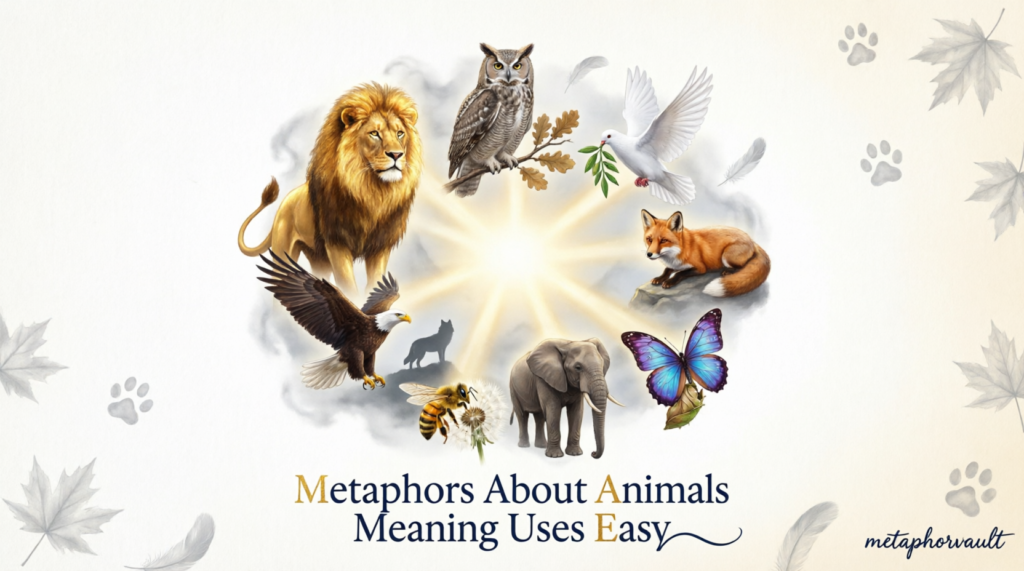
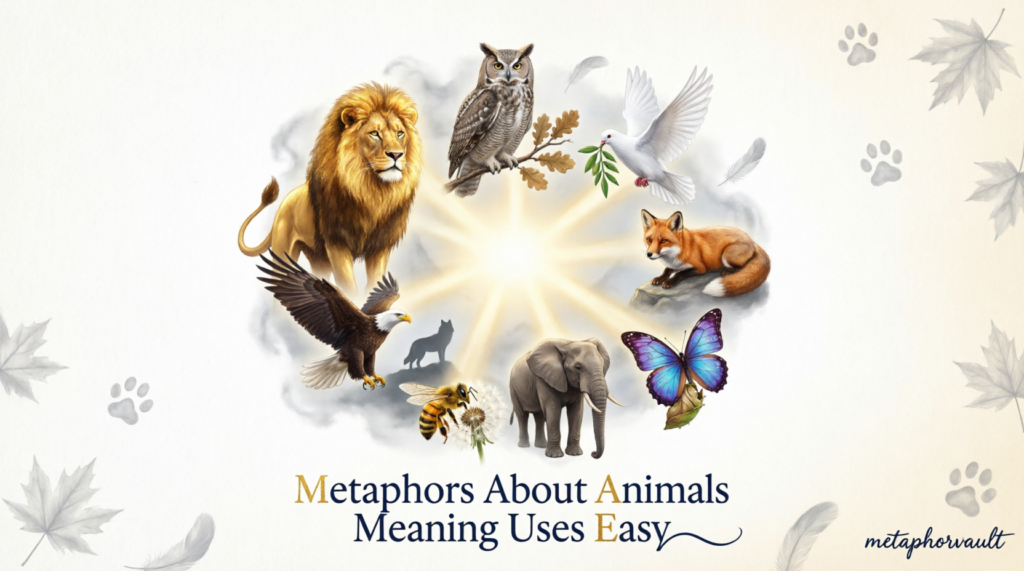
Metaphors about animals are figures of speech that describe a person, action, emotion, or situation by comparing it directly to an animal without using words like as or like. They help people express ideas in a vivid, memorable way by connecting human traits with well-known animal characteristics.
For example, saying someone is a lion suggests courage, while calling someone a turtle often suggests they move slowly or take their time. These comparisons are symbolic rather than literal.
People use animal metaphors in:
- Everyday conversations
- Books and stories
- Speeches
- Movies and TV shows
- Social media posts
- Workplace communication
- School writing
Definition and Meaning
A metaphor about animals compares something directly to an animal to highlight a shared quality or behavior.
Instead of saying:
“She is very brave.”
Someone might say:
“She is a lion.”
The speaker doesn’t mean she is actually a lion. The lion represents courage and strength.
Quick Summary Table
| Feature | Meaning |
|---|---|
| Definition | A direct comparison using an animal to describe someone or something |
| Purpose | Makes ideas easier to imagine and remember |
| Literal? | No |
| Common Uses | Speaking, writing, stories, speeches, social media |
| Example | “He is a workhorse.” |
Why We Use Metaphors About Animals
Animals have been part of human life for thousands of years. Because people easily recognize their behaviors, they make powerful symbols for describing human qualities.
Instead of giving a long explanation, a simple animal metaphor can communicate an idea almost instantly.
They Make Descriptions More Vivid
Saying someone is a night owl creates a much stronger image than simply saying they stay up late.
They Make Communication Faster
Animal metaphors often replace several descriptive sentences with just a few words.
For example:
- Busy bee immediately suggests someone works hard.
- Social butterfly quickly describes a friendly, outgoing person.
They Help Readers Remember Ideas
Writers often use animal metaphors because they create mental pictures that stay with readers long after they finish reading.
They Add Emotion
Calling someone a gentle lamb feels warmer than simply saying they are kind.
Likewise, describing a dishonest person as a snake carries a stronger emotional impact than simply calling them untrustworthy.
They Fit Many Situations
You’ll hear animal metaphors in:
- Casual conversations
- Children’s books
- Novels
- Business presentations
- Motivational speeches
- Sports commentary
- Social media captions
Used well, they make communication more engaging without making it complicated.
30 Metaphors About Animals With Meanings and Examples
1. Busy Bee
Meaning: Someone who is always working or staying productive.
Example sentence: Mia is a busy bee, finishing every project before the deadline.
Tone: Neutral
2. Lion
Meaning: A brave and fearless person.
Example sentence: The firefighter was a lion during the rescue.
Tone: Positive
3. Fox
Meaning: A clever or very intelligent person.
Example sentence: Ethan is a fox when it comes to solving puzzles.
Tone: Neutral
4. Owl
Meaning: A wise and thoughtful person.
Example sentence: Grandpa is an owl whose advice always helps.
Tone: Positive
5. Turtle
Meaning: Someone who moves slowly or works at a careful pace.
Example sentence: Ben is a turtle, but his work is always accurate.
Tone: Neutral
6. Shark
Meaning: A person who is aggressive or highly competitive.
Example sentence: She’s a shark in business negotiations.
Tone: Neutral
7. Snake
Meaning: Someone who is dishonest or untrustworthy.
Example sentence: Everyone felt betrayed because he turned out to be a snake.
Tone: Negative
8. Lamb
Meaning: A gentle, kind, or innocent person.
Example sentence: Emma is a lamb with everyone she meets.
Tone: Positive
9. Wolf
Meaning: Someone who is independent, bold, or sometimes dangerous.
Example sentence: Jake prefers working alone because he’s a wolf.
Tone: Neutral
10. Peacock
Meaning: Someone who enjoys showing off.
Example sentence: He walked into the room like a peacock.
Tone: Slightly Negative
11. Workhorse
Meaning: A dependable person who works hard.
Example sentence: Maria is the workhorse of the entire team.
Tone: Positive
12. Social Butterfly
Meaning: Someone who enjoys meeting and talking with many people.
Example sentence: Lily is a social butterfly at every party.
Tone: Positive
13. Eagle
Meaning: A person with excellent vision or sharp judgment.
Example sentence: Our coach is an eagle who notices every mistake.
Tone: Positive
14. Bear
Meaning: Someone who is strong or protective.
Example sentence: Dad became a bear when he defended his family.
Tone: Positive
15. Chameleon
Meaning: Someone who easily adapts to different situations.
Example sentence: Sara is a chameleon, fitting into every new workplace.
Tone: Positive
16. Cheetah
Meaning: Someone who works or moves extremely fast.
Example sentence: Noah is a cheetah on the soccer field.
Tone: Positive
17. Dove
Meaning: A peaceful and gentle person.
Example sentence: She remained a dove during the heated discussion.
Tone: Positive
18. Hawk
Meaning: Someone who watches everything carefully.
Example sentence: Our teacher is a hawk during exams.
Tone: Neutral
19. Rabbit
Meaning: A nervous or easily frightened person.
Example sentence: He became a rabbit before giving his speech.
Tone: Neutral
20. Bull
Meaning: A powerful and determined person.
Example sentence: Marcus charged through the challenge like a bull.
Tone: Positive
21. Cat
Meaning: Someone who is independent and confident.
Example sentence: Ava is a cat who enjoys doing things her own way.
Tone: Neutral
22. Puppy
Meaning: Someone who is cheerful, loyal, or eager to please.
Example sentence: The new employee was a puppy, excited to help everyone.
Tone: Positive
23. Rooster
Meaning: Someone who is proud and likes attention.
Example sentence: He acted like a rooster after winning the contest.
Tone: Slightly Negative
24. Beaver
Meaning: A hardworking and organized person.
Example sentence: Olivia is a beaver, always planning ahead.
Tone: Positive
25. Falcon
Meaning: Someone who acts quickly and accurately.
Example sentence: The detective was a falcon, spotting the clue immediately.
Tone: Positive
26. Goose
Meaning: Someone who behaves in a silly or clumsy way.
Example sentence: I felt like a goose after forgetting my wallet.
Tone: Informal
27. Donkey
Meaning: A stubborn person.
Example sentence: My brother can be a donkey when he refuses to change his mind.
Tone: Informal
28. Spider
Meaning: Someone who carefully plans or builds connections.
Example sentence: The project manager was a spider, bringing every part of the plan together.
Tone: Neutral
29. Whale
Meaning: Someone with great strength or influence.
Example sentence: The company became a whale in the technology industry.
Tone: Positive
30. Ant
Meaning: Someone who works steadily and never gives up.
Example sentence: Liam is an ant, making progress a little every day.
Tone: Positive
Quick Reference Table
| Animal Metaphor | Meaning | Tone |
|---|---|---|
| Busy Bee | Hardworking | Neutral |
| Lion | Brave | Positive |
| Fox | Clever | Neutral |
| Owl | Wise | Positive |
| Turtle | Slow and careful | Neutral |
| Shark | Aggressive, competitive | Neutral |
| Snake | Dishonest | Negative |
| Lamb | Gentle | Positive |
| Wolf | Independent | Neutral |
| Peacock | Shows off | Slightly Negative |
| Workhorse | Reliable worker | Positive |
| Social Butterfly | Outgoing | Positive |
| Eagle | Sharp judgment | Positive |
| Bear | Strong and protective | Positive |
| Chameleon | Adaptable | Positive |
| Cheetah | Fast | Positive |
| Dove | Peaceful | Positive |
| Hawk | Watchful | Neutral |
| Rabbit | Nervous | Neutral |
| Bull | Strong and determined | Positive |
| Cat | Independent | Neutral |
| Puppy | Loyal and eager | Positive |
| Rooster | Proud | Slightly Negative |
| Beaver | Organized and hardworking | Positive |
| Falcon | Quick and accurate | Positive |
| Goose | Silly or clumsy | Informal |
| Donkey | Stubborn | Informal |
| Spider | Strategic planner | Neutral |
| Whale | Powerful and influential | Positive |
| Ant | Persistent worker | Positive |
Real-Life Conversations
Conversation 1: Friends Planning a Weekend Trip
Emma: Have you talked to Jake about the camping trip?
Liam: Not yet. He’s such a night owl, so he’s probably still asleep.
Emma: True! But once he’s awake, he’s a busy bee getting everything ready.
Liam: That’s why we always ask him to organize the gear.
Emma: And don’t forget Mia. She’s a social butterfly. She’ll invite half the town if we let her.
Liam: That’s okay. We need someone to keep everyone talking around the campfire.
Conversation 2: Team Meeting at Work
Manager: We finished the project ahead of schedule. Great work, everyone.
Sophia: Daniel deserves a lot of credit. He’s been the workhorse of this project.
Daniel: Thanks, but everyone helped.
Manager: I also appreciate Maya. She’s an eagle when it comes to spotting small mistakes before they become big problems.
Maya: I just try to pay attention to the details.
Manager: That’s exactly why our clients trust our work.
Everyday Usage
Animal metaphors appear naturally in many parts of daily life. They help people explain ideas quickly without using long descriptions.
In Everyday Conversations
Friends and family often use these expressions when talking about personalities or habits.
Examples include:
- “My sister is a busy bee.”
- “He’s a fox when solving problems.”
- “She’s a lamb around children.”
These phrases sound natural because many people already understand the animal traits behind them.
In Writing
Authors use animal metaphors to make characters easier to imagine.
Instead of writing several sentences about someone’s bravery, a writer might simply describe the character as a lion.
This creates a stronger mental picture for readers.
On Social Media
Short, colorful expressions fit perfectly in captions, comments, and text messages.
For example:
- “Back to work, busy bee mode.”
- “Feeling like a social butterfly tonight.”
- “Running like a cheetah to catch my flight.”
Because they’re short and expressive, animal metaphors often grab attention more than plain descriptions.
Common Mistakes
| Mistake | Reason | Correct Version |
|---|---|---|
| Taking the metaphor literally | Animal metaphors describe qualities, not actual animals. | “She is a lion” means she is brave, not that she is an animal. |
| Using a metaphor with the wrong meaning | Some animals symbolize different traits than people expect. | Use owl for wisdom, not speed. |
| Choosing a negative metaphor by accident | Words like snake or rat may offend someone. | Pick a neutral or positive metaphor when appropriate. |
| Mixing several metaphors together | Too many comparisons make the sentence confusing. | Stick with one clear metaphor at a time. |
| Using uncommon animal comparisons | Readers may not understand unfamiliar symbols. | Choose widely recognized expressions such as busy bee or workhorse. |
| Ignoring the audience | Informal metaphors may not fit formal situations. | Use expressions that match the setting and readers. |
Related Terms
Animal metaphors are closely related to several other language tools, but they are not the same.
| Term | How It Differs from Animal Metaphors | Example |
|---|---|---|
| Simile | Uses like or as to compare two things. | “She is like a lion.” |
| Personification | Gives human qualities to animals or objects. | “The owl whispered a warning.” |
| Idiom | A fixed expression whose meaning isn’t obvious from the words alone. | “Hold your horses.” |
Although these terms sometimes overlap, animal metaphors make a direct comparison between a person or thing and an animal.
Frequently Asked Questions
What are metaphors about animals?
Animal metaphors are expressions that describe people, emotions, or situations by directly comparing them to animals. The comparison highlights a shared quality, such as courage, wisdom, speed, or loyalty, without meaning the comparison literally.
Why do writers use animal metaphors?
They create clear mental images with just a few words. Readers quickly recognize familiar animal traits, making descriptions more memorable, emotional, and engaging than plain language.
Are animal metaphors and similes the same?
No. A metaphor says something is an animal, while a simile says something is like or as an animal. For example, “He is a lion” is a metaphor, while “He is as brave as a lion” is a simile.
Can animal metaphors have positive and negative meanings?
Yes. Some represent admirable qualities, such as lion, owl, or workhorse. Others carry negative meanings, including snake, peacock, or donkey, depending on the context and culture.
Are animal metaphors used in everyday English?
Yes. Native English speakers use them in conversations, books, movies, classrooms, workplaces, and online. Many have become common parts of everyday speech because they’re easy to understand.
How can I learn to use animal metaphors naturally?
Read books, pay attention to conversations, and notice how these expressions appear in articles, movies, and social media. Practice using them in your own sentences so they become part of your everyday vocabulary.
Do animal metaphors always mean the same thing?
Not always. While many meanings are widely understood, some can change depending on the culture, region, or situation. For example, one animal may symbolize wisdom in one culture but represent something different in another.
Should I use animal metaphors in professional writing?
Yes, but choose them carefully. Positive, familiar expressions can make presentations and workplace communication more engaging. Avoid harsh or insulting metaphors when discussing coworkers, clients, or sensitive topics to keep your message respectful.
Final Thoughts
Animal metaphors make English more colorful, expressive, and easier to remember. They turn simple descriptions into vivid images that help people understand ideas quickly. From calling someone a busy bee to describing a fearless leader as a lion, these expressions bring personality to everyday conversations, stories, and professional communication.
As you continue reading, listening, and speaking English, you’ll notice animal metaphors almost everywhere. The more you practice using them in the right context, the more natural and confident your communication will become.
descover more post
29+ River Metaphors and What They Really Mean 2026
30+Quiet Metaphors Powerful Examples and How to Use …
26+ Creative Metaphors for Wind With Meanings & …

Anderson is the founder and lead content writer at MetaphorVault.com, where he specializes in creating engaging, easy-to-understand content about metaphors, idioms, figurative language, and modern English expressions. With over 8 years of experience in content writing and language education, he is passionate about making complex language concepts simple and practical for readers of all levels. His work focuses on delivering accurate, well-researched, and reader-friendly articles that help students, writers, educators, and English learners improve their communication skills. Through MetaphorVault.com, Anderson is committed to publishing high-quality, informative content that is both engaging and trustworthy.